

A social media certification is an official credential earned by passing a competency exam that proves you can execute social media marketing at a professional level. This is distinct from a certificate, which simply confirms you completed a course. Understanding this difference matters because employers read these credentials differently on a resume. Meta Blueprint, HubSpot Academy, and Hootsuite Certification are three of the most recognized names in the field, and each credential type carries different weight, cost, and renewal obligations. Getting clear on social media certifications explained means knowing exactly what you are earning and why it counts.
What are the main types of social media certifications?
Certifications and certificates are not the same thing, and conflating them on a resume is a common mistake. A certification requires passing a standardized exam and often carries a formal designation. A certificate marks the end of a course you attended or completed online, with no exam required.

Meta Blueprint Professional certifications require scoring 700 or more points on a proctored exam and expire every two years. That renewal requirement is the clearest sign you are dealing with a true certification rather than a course badge. HubSpot Academy, by contrast, offers free certificates that you earn by finishing video lessons and short quizzes. Both have value, but they signal different things to a hiring manager.
Here is a breakdown of the most recognized credentials in the field:
- Meta Blueprint Certification (e.g., Digital Marketing Associate, Media Buying Professional): Proctored exam, costs $99–$150 for most professional exams, valid for two years.
- HubSpot Academy Social Media Certificate: Free, no formal exam, completed in roughly 4–5 hours, no expiration.
- Hootsuite Social Marketing Certification: Exam required, paid tier available, widely recognized by agencies.
- Cornell Certificate Program in Social Media Marketing: Academic certificate, takes approximately three months, no ongoing renewal.
| Credential | Cost | Exam Required | Renewal | Duration |
|---|---|---|---|---|
| Meta Blueprint Professional | $99–$150 | Yes | Every 2 years | Self-paced |
| HubSpot Academy Certificate | Free | No | None | 4–5 hours |
| Hootsuite Certification | Paid | Yes | Periodic | Self-paced |
| Cornell Certificate | Paid (academic) | No formal exam | None | ~3 months |
Pro Tip: Stack a free HubSpot certificate with a paid Meta Blueprint exam. You get foundational knowledge at no cost, then prove exam-level competency where it counts most.
How do certifications benefit your career and job prospects?
Certifications signal professional readiness to hiring managers before you ever walk into an interview. Recruiters scan resumes for certification keywords to identify candidates who understand platform-specific advertising, analytics, and strategy. That scan happens in seconds, and a recognized credential keeps your resume in the pile.
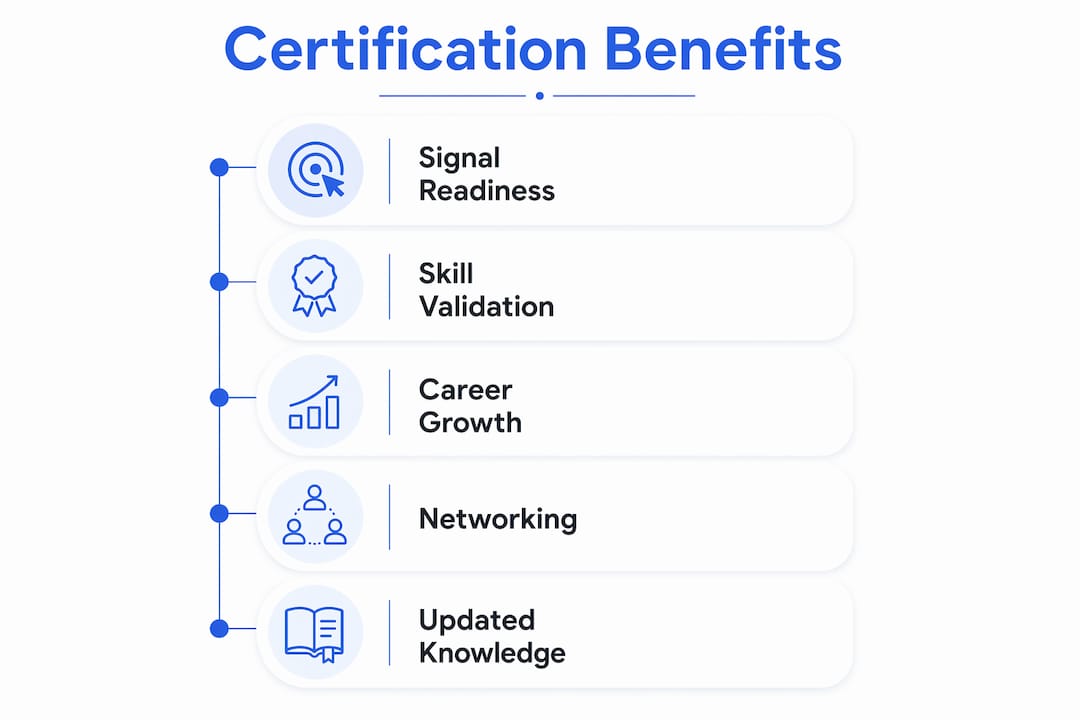
The career benefits go beyond the initial screen. Certifications help you overcome imposter syndrome by grounding your knowledge in proven best practices. When you can point to a Meta Blueprint credential, you are not just claiming you know Facebook Ads. You are proving it. That confidence shows up in interviews and client conversations.
Key career benefits of earning a recognized credential include:
- Differentiation in a crowded field. Employers generally do not require certification, but they value it as a differentiator among many similar applicants.
- Proof of platform knowledge. Credentials like Meta Blueprint confirm you understand ad targeting, campaign structure, and performance measurement.
- Faster trust with clients. Freelancers and consultants who display certifications close client conversations faster because the credential does part of the selling.
- Access to higher-level roles. Roles managing budgets and analytics require demonstrated competency. Certifications signal you are ready for that responsibility.
The one limitation worth naming directly: a certification alone is not enough. Hiring managers prioritize evidence of applied knowledge over badges. A candidate who lists three certifications but shows no portfolio work is less competitive than one with a single credential and two documented campaign results.
Pro Tip: Turn every certification module into a portfolio artifact. Write a short case study, build a mock campaign, or document a real result. Pair the badge with proof.
What do certifications cost, and how long do they take?
Cost and time vary widely depending on the credential type. Meta’s Digital Marketing Associate exam is free, while specialized professional exams cost between $99 and $150. HubSpot Academy courses take roughly 4–5 hours and cost nothing. Cornell’s certificate program runs approximately three months and carries an academic price tag.
Here is a practical reference for planning your investment:
| Credential | Estimated Cost | Time to Complete | Renewal Required |
|---|---|---|---|
| Meta Digital Marketing Associate | Free | Self-paced | Every 2 years |
| Meta Professional Exams | $99–$150 per exam | Self-paced | Every 2 years |
| HubSpot Academy Certificate | Free | 4–5 hours | None |
| Cornell Certificate Program | Paid (academic rate) | ~3 months | None |
| Hootsuite Certification | Paid | Self-paced | Periodic |
Renewal is the cost most people forget to budget for. Meta Blueprint certifications expire every two years, which means you pay again and re-study. That is not a flaw in the system. It reflects how fast platform algorithms and ad tools change. A credential that never expires in a field that changes monthly is not worth much.
Certification programs remain more adaptable to industry trends than traditional marketing degrees because they update curricula faster. That speed is a genuine advantage for anyone who wants current knowledge without a multi-year academic commitment.
How to choose the best social media certification for your goals
Choosing the right credential starts with knowing what role you are targeting. A content creator needs different proof points than a media buyer or a social media strategist. Matching your certification to your desired role makes the credential more persuasive on a resume and more useful in the actual job.
Follow these steps to select the right path:
- Identify your target role. Content creators benefit from platform-specific certificates. Media buyers need Meta Blueprint Professional credentials. Strategists benefit from broader programs like Cornell or HubSpot.
- Audit your current skill gaps. Review social media job requirements for roles you want. Note which skills appear repeatedly in job postings.
- Match cost to career stage. Start with free certificates if you are early in your career. Invest in paid exams once you have a portfolio and are ready to compete for senior roles.
- Check renewal requirements. If you choose a certification that expires, build renewal into your annual career plan. Missing a renewal date means losing a credential you paid for.
- Plan your portfolio alongside your studies. Every module you complete should produce one piece of portfolio evidence. A social media training path works best when credentials and real work grow together.
The most common mistake is collecting certificates without a strategy. Three free certificates from the same platform do not add up to one strong paid certification in a hiring manager’s eyes. Depth beats breadth at the credential level.
Pro Tip: Before paying for any exam, check whether the issuing body publishes a free prep course. Meta, for example, offers free preparatory content before charging for the proctored exam.
Key Takeaways
Social media certifications are most valuable when paired with a portfolio of documented results, not treated as standalone credentials.
| Point | Details |
|---|---|
| Certifications vs. certificates | Certifications require passing an exam; certificates confirm course completion only. |
| Cost range | Free options exist at HubSpot Academy; Meta professional exams cost $99–$150. |
| Renewal matters | Meta Blueprint credentials expire every two years, requiring re-examination and continued study. |
| Portfolio is non-negotiable | Hiring managers prioritize documented campaign results over credential badges alone. |
| Match credential to role | Choose certifications based on your target role, not just what is free or popular. |
What I have learned about certifications that most guides skip
Certifications gave me a framework I did not have before. Before I earned my first Meta Blueprint credential, I could run ads. After it, I could explain why a campaign structure worked and tie it to a business outcome. That shift in language is what actually gets you hired or promoted.
The uncomfortable truth is that portfolio and measurable results are far more persuasive to employers than credentials alone. I have seen candidates with four certifications lose roles to candidates with one certification and a documented case study showing a 3x return on ad spend. The case study wins every time.
What I tell anyone starting out: treat your certification coursework as a client project. Build the mock campaign. Write the report. Document the numbers, even if they are hypothetical. A resume that shows certifications alongside concrete results reads completely differently than one that lists badges in a sidebar.
The other thing most guides skip is the language shift. Certification programs teach you to speak in business outcomes, not platform features. That vocabulary change is worth more than the badge itself. When you can walk into a conversation and talk about cost per acquisition, audience segmentation, and conversion attribution, you stop sounding like a social media user and start sounding like a social media professional.
— Yassine
Your next step toward a certified social media career
Earning a credential is one part of the equation. Finding the right role to put it to work is the other.
Remoteprofitly connects certified social media professionals with remote social media jobs across content creation, media buying, and strategy roles. The platform has placed over 100 candidates in the past year and offers more than 50 resources, including guides on building your portfolio and navigating the remote job market. Whether you just earned your first HubSpot certificate or passed a Meta Blueprint exam, Remoteprofitly gives you a community and a job board built specifically for social media careers. Your credential deserves an audience that knows what it means.
FAQ
What is the difference between a social media certification and a certificate?
A certification requires passing a standardized competency exam and often expires, while a certificate confirms you completed a course without a formal exam requirement.
How much does a social media certification cost?
Costs range from free, as with HubSpot Academy and Meta’s Digital Marketing Associate exam, to $99–$150 for Meta’s professional-level proctored exams.
Do employers require social media certifications?
Employers generally do not require certification, but they value it as a differentiator that signals platform-specific knowledge and professional commitment among applicants.
How long does it take to get social media certified?
Time varies widely. HubSpot Academy certificates take roughly 4–5 hours, while comprehensive programs like Cornell’s certificate take approximately three months.
Do social media certifications expire?
Meta Blueprint certifications expire every two years and require re-examination. Certificates from programs like HubSpot Academy typically do not expire.
Recommended
- Social Media Training Career Paths Explained – Social Media Job Search Community
- Social Media Job Requirements: Master 2024 Skills – Social Media Job Search Community
- Top Online Courses to Upskill in Social Media Marketing 2025 – Social Media Job Search Community
- Remote Workers Success Stories in Social Media Careers – Social Media Job Search Community