

A career transition to remote social media is defined as the deliberate move from any professional background into a full-time, part-time, or freelance digital marketing role managed entirely online. This shift is achievable without a formal degree. Practical portfolios showing real execution matter more to hiring managers than credentials. Professionals who commit to targeted skill-building and document their work consistently reach mid-level compensation within 12–18 months. Remoteprofitly has placed over 100 candidates in remote social media positions in the past year alone, which shows the demand is real and the path is well-worn.
What skills do you need to start a remote social media career?
The core technical skills for remote social media roles fall into four categories: content creation, copywriting, platform analytics, and algorithm literacy. Each one directly affects whether your work drives business results or just generates likes. Employers hiring remotely care about output and measurable impact, not effort.

Essential tools by skill category
| Skill Category | Tools to Know |
|---|---|
| Graphic design | Canva, Adobe Photoshop, Adobe Express |
| Content scheduling | Hootsuite, Later, Buffer |
| Analytics and reporting | Google Analytics, Meta Business Suite, Sprout Social |
| Project management | Slack, Notion, Asana |
| Copywriting and SEO | Google Docs, Hemingway Editor, Surfer SEO |
Beyond tools, remote-first hiring managers prioritize autonomous workflow and documented project management over passion for social media. That means you need to show you can manage a content calendar, hit deadlines, and communicate progress without a supervisor checking in daily. Candidates who use Slack or Notion to demonstrate ownership of projects consistently outperform those who rely on informal communication.
Successful remote social media professionals also balance creative output with business-oriented thinking. You need to understand how a campaign connects to sales, brand consistency, and customer retention. That strategic layer separates candidates who get hired from those who stay stuck in the application queue.
- Content creation: Write and design posts natively for each platform (Instagram, LinkedIn, TikTok, X).
- Analytics: Read performance data and translate it into recommendations, not just reports.
- Platform algorithms: Understand how reach, engagement timing, and content formats interact on each network.
- Business metrics: Connect social activity to revenue, leads, or customer lifetime value.
Pro Tip: Earn a certificate from Google (Google Digital Marketing & E-commerce) or Adobe to validate your expertise. Recognized certifications help justify higher rates when you move into freelance or contract work.
How do you build a portfolio for remote social media jobs?
A digital portfolio is the single most effective proof of hire-ability. Many employers prioritize practical evidence over degrees when evaluating remote candidates. Your portfolio replaces the office reputation you would build in a traditional job. It needs to show that you can plan, execute, and measure a social media campaign from start to finish.
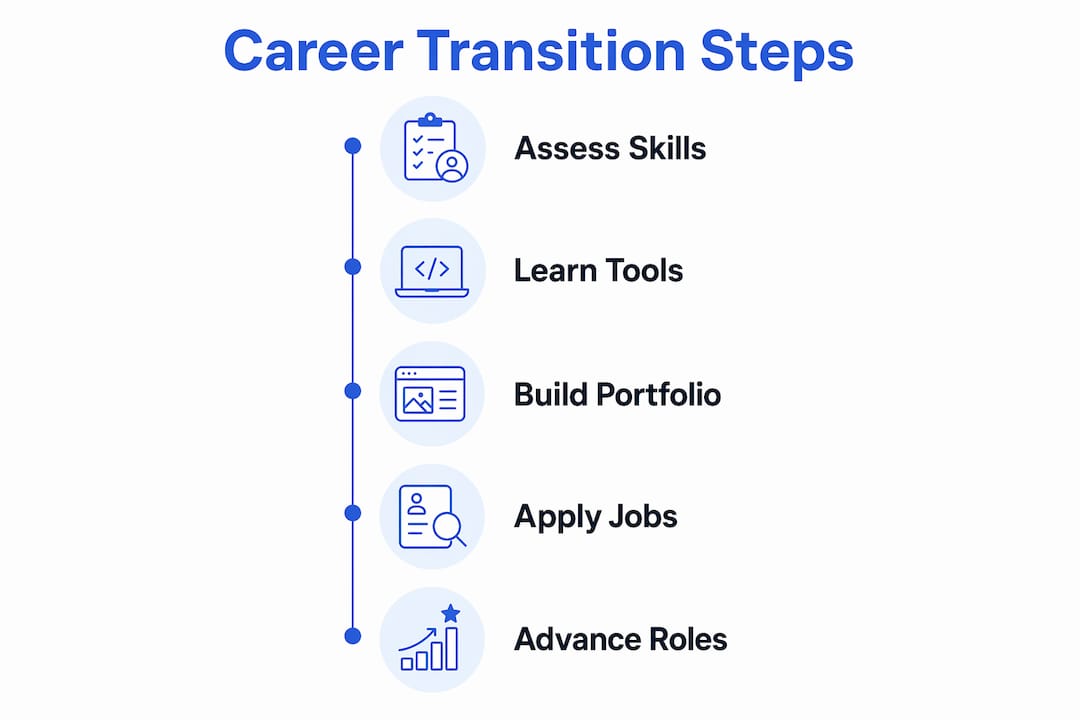
Strong portfolio assets include mock content calendars, analytics screenshots showing growth over time, before-and-after engagement comparisons, and full campaign write-ups that explain your strategy and results. You do not need a paying client to create these. A personal brand account, a mock brand project, or a nonprofit you support all work as legitimate portfolio material.
Steps to build an effective portfolio
- Choose two or three platforms where you will focus your work. Depth beats breadth for new professionals.
- Create a mock brand or use a real one you manage, even informally. Document every decision you make.
- Build a content calendar for 30 days and execute it. Screenshot your scheduling tool and the published posts.
- Pull analytics reports at the end of each month. Annotate what worked, what did not, and why.
- Write a one-page case study for each campaign. Include the goal, the approach, the results, and the lesson.
- Host your portfolio on a personal website using platforms like Squarespace or Carrd, or use a PDF deck for applications.
Volunteer opportunities and freelance projects add real-world credibility that mock projects alone cannot match. Offer to manage social media for a local nonprofit, a friend’s small business, or a community organization. Even three months of documented, real-account management gives you a story to tell in interviews.
Pro Tip: When presenting your portfolio, lead with results, not process. “Grew Instagram engagement by 40% in 60 days” is more compelling than “managed daily posting.” Numbers tell the story faster than descriptions. You can find a detailed walkthrough at Remoteprofitly’s portfolio guide.
Where can you find remote social media job opportunities?
The best channels for finding remote social media jobs combine niche job boards, professional communities, and direct outreach. General job boards surface remote roles, but niche platforms filter for the exact type of work you want. Remoteprofitly’s job search platform connects candidates specifically with social media roles across full-time, part-time, and freelance formats.
Remote social media roles include flexible work-from-anywhere options across all three employment types. That flexibility means you can start with freelance work to build your portfolio while you apply for full-time positions. Many professionals use this parallel approach to generate income and experience simultaneously.
- Niche job boards: Use platforms focused on remote or digital marketing roles to filter out irrelevant listings.
- LinkedIn: Search “remote social media manager” and set job alerts. Apply within the first 24 hours of a posting going live.
- Freelance marketplaces: Entry-level freelance work builds your client list and your portfolio at the same time.
- Professional communities: Networking via LinkedIn groups and Facebook communities exposes job postings, referrals, and peer advice you will not find on job boards.
Tailor every application to the specific role. Replace generic resume language with metrics and platform-specific accomplishments. A resume that says “managed social media accounts” loses to one that says “grew a LinkedIn page from 800 to 4,200 followers in five months by publishing three original articles weekly.” Specificity signals competence. You can also explore remote work networking communities to accelerate referrals.
What are the common challenges when switching to remote social media?
The biggest obstacle professionals face is the pace of platform change. Instagram, TikTok, and LinkedIn update their algorithms and ad formats multiple times per year. Staying current is not optional. Professionals who treat learning as a scheduled weekly activity rather than a reactive scramble maintain a clear advantage.
A second challenge is the gap between creative instinct and strategic business thinking. Many newcomers mistakenly believe remote social media work is purely creative. Employers expect you to connect content decisions to business outcomes. If you cannot explain how a campaign supports revenue or brand equity, you will struggle to advance beyond entry-level roles.
- Fragmented portfolios: Scattered work across multiple platforms with no unifying case study format signals disorganization. Consolidate everything into one presentable location.
- Undocumented workflows: Remote employers cannot see you work. Documenting your project management in tools like Asana or Notion proves you can operate independently.
- Isolation: Working from home in social media can feel disconnected. Join professional communities and schedule regular peer check-ins to stay motivated and informed.
Pro Tip: Block 30 minutes every Friday to review one platform’s latest algorithm update, read one industry newsletter (Social Media Today, Marketing Brew), and update your workflow documentation. This habit compounds over months into a genuine competitive edge.
How do you advance after your initial remote social media transition?
Career growth in remote social media follows two main paths: deep specialization or broad marketing leadership. Specialists become the go-to expert for one platform, content format, or industry vertical. Generalists move toward social media director or VP of marketing roles that require managing teams and budgets.
Senior and director-level social media roles command salaries of $120,000–$175,000 and above. These roles require demonstrating strategic impact beyond vanity metrics like follower counts. You need to show how your work moved revenue, reduced customer acquisition costs, or built measurable brand authority.
- Specialize early: Pick one platform or content type (short-form video, B2B LinkedIn, paid social) and become the best in that lane.
- Document business impact: Track every campaign against a business metric, not just an engagement metric.
- Build leadership skills: Volunteer to mentor junior team members or lead cross-functional projects to demonstrate readiness for senior roles.
- Pursue advanced credentials: Platform-specific certifications from Meta Blueprint or HubSpot Academy signal continued growth to employers.
Professionals who want to understand the full scope of senior responsibilities can review remote social media strategist roles to benchmark where they are headed.
Final Steps for Your Remote Social Media Career Transition
Making a successful move into remote social media requires a documented portfolio, business-oriented skills, and consistent networking across niche platforms and professional communities.
| Point | Details |
|---|---|
| Portfolio over degree | Practical work samples and case studies matter more than formal credentials to remote hiring managers. |
| Tools signal autonomy | Proficiency in Slack, Notion, and Asana shows you can manage projects without daily supervision. |
| Certifications add value | Google and Adobe certificates validate expertise and support higher freelance rates. |
| Networking accelerates hiring | LinkedIn groups and professional communities surface referrals and postings not listed on job boards. |
| Senior roles demand strategy | Salaries of $120,000–$175,000+ require connecting social media work to measurable business outcomes. |
What I’ve learned from watching professionals make this switch
Most people who struggle with this transition underestimate one thing: the documentation habit. They build skills, they create content, and they even land a few freelance clients. Then they apply for a full-time remote role and cannot show a hiring manager how they managed a project from brief to publish to report. That gap costs them the offer.
The professionals I have seen move fastest are not always the most creative. They are the ones who treat their workflow like a product. They write down their process, they screenshot their tools, and they build case studies before anyone asks for them. That discipline signals remote readiness more clearly than any portfolio piece.
Formal education is not the barrier. The real barrier is the reluctance to self-direct. Remote social media work rewards people who set their own standards and hold themselves accountable without external structure. If you build that muscle early, through freelance work, volunteer projects, or even a personal brand account, the job search becomes much shorter. You can read real examples of how this plays out in career transition success stories from professionals who made the same move.
— Yassine
Remoteprofitly: your next step in remote social media
Remoteprofitly connects professionals with legitimate remote social media positions across full-time, part-time, and freelance formats. The platform offers over 50 resources including guides, expert advice, and peer community support designed specifically for social media job seekers.
Remoteprofitly has placed over 100 candidates in remote social media roles in the past year. The job search community gives you access to curated listings, networking opportunities, and the peer support that makes the transition faster and less isolating. If you are ready to move from planning to applying, Remoteprofitly is built for exactly that step. You can also browse flexible remote openings to find the format that fits your current situation.
FAQ
Do you need a degree to get remote social media jobs?
No formal degree is required for most remote social media roles. Hiring managers prioritize portfolios showing real execution, and 12–18 months of documented experience often qualifies candidates for mid-level positions.
What tools should you learn to work remotely in social media?
The most valued tools include Canva or Adobe for design, Hootsuite or Later for scheduling, Google Analytics for reporting, and Slack or Notion for project management and workflow documentation.
How long does it take to transition to a remote social media career?
Most professionals build enough portfolio evidence and skill depth within 12–18 months to qualify for mid-level remote roles with compensation above $60,000 annually.
What is the best way to find freelance social media opportunities?
Freelance marketplaces, LinkedIn job alerts, and niche remote job boards are the most effective channels. Joining professional groups on LinkedIn and Facebook also surfaces referrals and unlisted opportunities.
How much do senior remote social media roles pay?
Senior and director-level remote social media positions command salaries of $120,000–$175,000 and above, with compensation tied to demonstrated strategic business impact rather than follower growth metrics.
Recommended
- Remote Workers Success Stories in Social Media Careers – Social Media Job Search Community
- Remote Social Media Strategist Roles: The 2025 Guide – Social Media Job Search Community
- The Ultimate Guide to Social Media Manager Remote Jobs – Social Media Job Search Community
- Remote Social Media Jobs: Find Your Dream Position – Social Media Job Search Community