

Uniting Your Remote Team: Building Camaraderie Across the Miles
In today’s remote work environment, maintaining team cohesion and morale presents a unique challenge. The informal interactions that once happened organically around the office are now often replaced with scheduled video calls and instant messages. While remote work offers flexibility, it can hinder the development of strong team relationships. How can leaders cultivate a sense of belonging and shared purpose when team members are geographically dispersed?
Team building itself has undergone a significant evolution. Forget the awkward trust falls of the past; modern team building, particularly for remote teams, focuses on fostering authentic connections and meaningful communication. It emphasizes psychological safety and draws on principles of positive psychology to create high-performing teams. Remote team building is no longer an afterthought, but a vital investment in team success and employee well-being.
Ten Activities to Bridge the Distance
This article explores ten effective remote team building activities designed to bridge the geographical divide and foster camaraderie. Understanding the principles behind these activities will empower you to implement and adapt them to the specific needs of your remote team. Transform your virtual workspace from a collection of individuals into a cohesive and thriving unit. Let’s explore some options:
-
Virtual Coffee Breaks: Encourage informal connections through regular virtual coffee breaks. These casual meetups allow team members to chat and connect on a personal level.
-
Online Games: Playing online games together, such as Among Us or virtual escape rooms, can be a fun and engaging way to build teamwork and communication skills.
-
Team Lunch (Virtual): Coordinate a virtual team lunch where everyone orders in or prepares the same meal. This creates a shared experience and encourages casual conversation.
-
Skill-Sharing Sessions: Have team members host short sessions to share their expertise or hobbies. This promotes learning and fosters a sense of community.
-
Book Clubs or Movie Nights: Start a virtual book club or movie night. This creates shared experiences and prompts discussions beyond work-related topics.
-
Online Team Challenges: Organize team challenges, like step-counting competitions or photo contests, to create a sense of friendly competition and camaraderie.
-
Virtual Team Retreats: While more structured, virtual retreats can provide dedicated time for team building activities, workshops, and social interactions.
-
Recognition and Appreciation Initiatives: Publicly acknowledge team members’ accomplishments and contributions through online platforms or virtual meetings. This reinforces positive behavior and strengthens team bonds.
-
Collaborative Playlists: Create shared playlists on platforms like Spotify or Apple Music. Music can be a powerful tool for connecting people and setting a positive mood.
-
Team Building Platforms: Utilize dedicated platforms like Gatheround or Teamflow for more structured and interactive virtual team building experiences.
By implementing these activities, you can cultivate stronger relationships, improve communication, and boost morale within your remote team. Remember to adapt these suggestions to your team’s unique personality and preferences to ensure maximum engagement and positive outcomes.
Virtual Team Trivia


Virtual Team Trivia is a fantastic way to energize your remote team and build stronger relationships. It combines friendly competition with shared knowledge to create a fun, interactive experience. It’s an easy, adaptable, and effective way to connect colleagues, no matter where they are located.
This activity involves teams answering questions on various customizable categories. This means you can tailor the trivia to your team’s specific interests and company culture. Popular categories include pop culture, company history, and even industry-specific knowledge.
The increasing popularity of platforms like Kahoot!, Quizizz, TriviaHub, and Water Cooler Trivia has made virtual trivia even more accessible. These platforms offer user-friendly interfaces, automated scoring, and even multimedia integration. Running these trivia sessions on video conferencing platforms, often using breakout rooms for smaller team discussions, adds another layer of interaction.
Features and Benefits
- Customizable Categories: Tailor questions to your team’s interests, from general knowledge to niche topics like company trivia or industry trends.
- Platform Integration: Works seamlessly with video conferencing platforms and breakout rooms.
- Scalability: Suitable for small teams and large organizations.
- Multimedia Integration: Engage participants with images, audio clips, and videos within the trivia questions.
- Promotes Communication and Collaboration: Encourages teamwork and discussion as teams work together to answer questions.
Pros and Cons of Virtual Team Trivia
Let’s weigh the advantages and disadvantages of incorporating virtual trivia into your team-building activities.
Pros:
- Easy to Set Up: No special equipment or software is needed beyond a video conferencing platform.
- Appeals to a Wide Audience: Caters to a wide range of participants with diverse interests.
- Encourages Interaction: Fosters communication and strengthens team bonds.
- Highly Adaptable: Easily customized to fit different team cultures and preferences.
Cons:
- Potential for Competition: Maintaining a lighthearted and encouraging atmosphere is key to avoiding excessive competitiveness.
- Varying Knowledge Levels: Consider team-based play to mitigate potential embarrassment for individuals with less knowledge in certain areas.
- Requires Preparation: Creating engaging and relevant trivia questions takes time.
- Possible Performance Anxiety: Some participants may feel uncomfortable being put on the spot.
Real-World Examples
Several companies have successfully integrated virtual team trivia into their culture:
- HubSpot: Reportedly hosts monthly themed trivia sessions to connect its global team.
- Automattic: Is said to use WordPress-themed trivia during company retreats.
- GitLab: Is known to incorporate trivia about remote work best practices into their onboarding process.
Tips for Implementation
Here are some tips for a successful virtual trivia event:
- Use Trivia Platforms: Leverage platforms like Kahoot! or Quizizz for streamlined question creation, scoring, and multimedia integration.
- Vary Question Types: Mix team-specific questions with general knowledge for inclusivity.
- Focus on Teams: Encourage teamwork and reduce individual pressure with team-based competition.
- Prepare Extra Questions: Always have more questions prepared than you think you’ll need.
- Offer Incentives: Small prizes or recognition can boost engagement and motivation.
By following these tips, you can create a memorable and impactful team-building experience for your remote team, fostering connection and engagement.
2. Virtual Escape Rooms
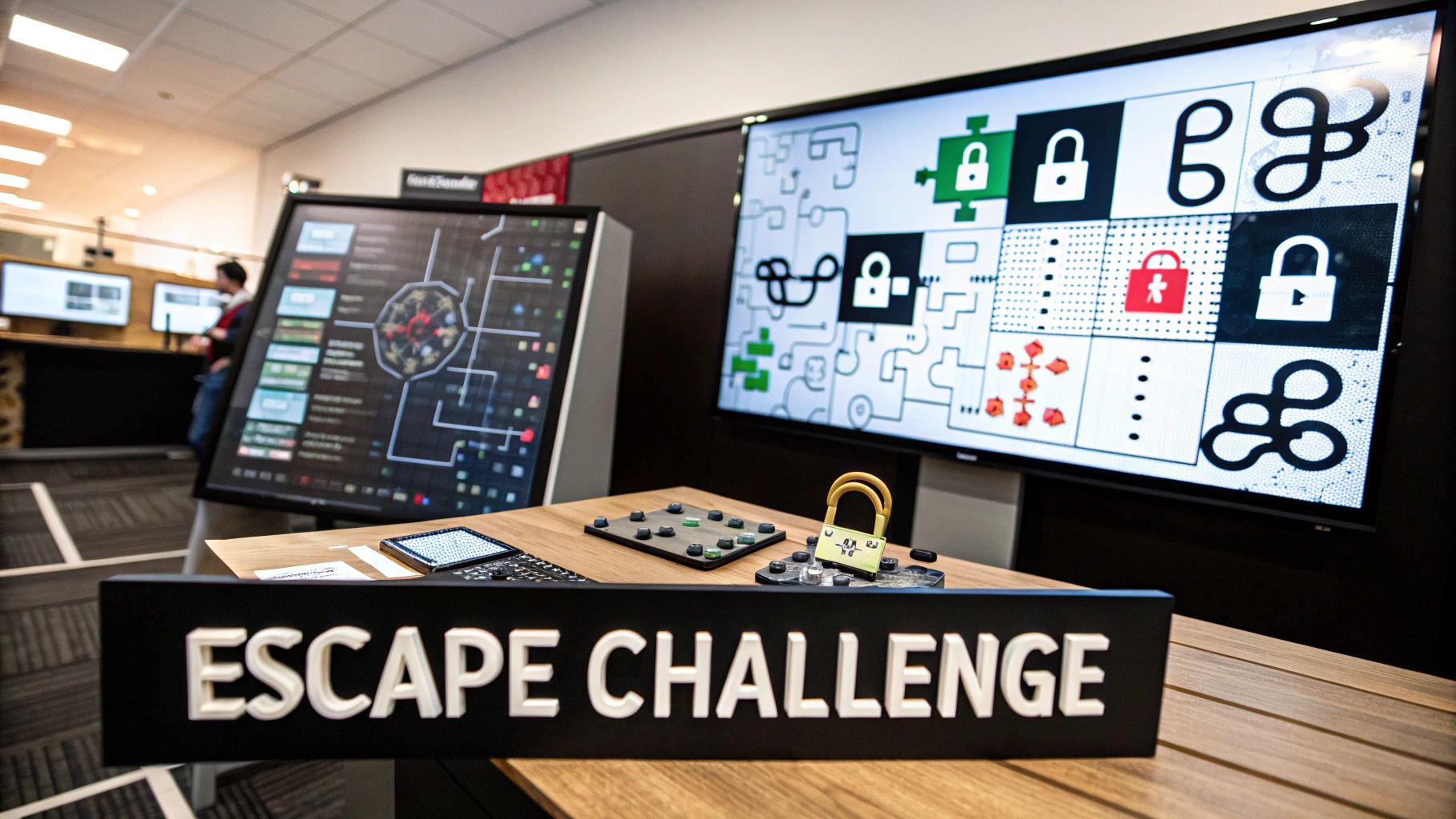
Virtual escape rooms have quickly become a go-to activity for remote team building. They take the classic escape room experience and move it online, creating a dynamic and engaging activity. Teams work together to solve puzzles within a time limit, all from their own desks.
This format naturally encourages communication, problem-solving, and strategic thinking. These are all essential skills for any successful team, especially those working remotely. Virtual escape rooms help build stronger team bonds and a sense of shared accomplishment.
Immersive Storylines and Themes
These digital adventures offer interactive puzzles and challenges designed for teamwork. Immersive storylines and themes, from ancient mysteries to futuristic space odysseys, add to the excitement. The time limit creates a healthy sense of urgency, motivating teams to collaborate efficiently. Some rooms feature live hosts to guide the team, while others are self-guided through platforms like Zoom.
Popular Providers and Corporate Adoption
Several companies have spearheaded the virtual escape room trend. The Escape Game, Puzzle Break, Outback Team Building, and Virtual Escape Room offer diverse pre-designed experiences for various group sizes and skill levels.
Many large corporations have also embraced virtual escape rooms. Companies like Salesforce, IBM, and Microsoft have integrated them into their team-building strategies. Salesforce, for instance, used The Escape Game during their transition to remote work. IBM incorporated custom-designed rooms themed around their company values. Microsoft leverages them to help new project teams establish strong collaborative patterns early on.
Pros and Cons of Virtual Escape Rooms
Pros:
- Develops critical thinking and creative problem-solving skills
- Highlights natural leadership within teams
- Provides a common goal to unite teams
- Creates a highly engaging and memorable experience
Cons:
- Can be more expensive than other virtual team-building activities
- May require specific platforms or outside vendors
- Time zone differences can be tricky for global teams
- Technical issues may affect some participants
Tips for a Smooth Experience
- Tech Check: Test the platform and technology beforehand with everyone.
- Difficulty Level: Select a difficulty that suits your team’s experience with escape rooms and each other.
- Time Zones: Be mindful of time zone differences when scheduling.
- Post-Game Debrief: Discuss what worked well and what could be improved communication-wise.
- Strategic Roles: Consider assigning roles based on individual strengths.
Looking to improve your remote work experience? Check out resources like those found at https://remoteprofitly.com/post-sitemap.xml for valuable insights on remote work, career transitions, and networking.
Online Office Games: Building Remote Team Connections
Online Office Games offer a structured and fun way to build stronger teams in remote work environments. These professionally led virtual competitions and challenges encourage collaboration, communication, and friendly competition without anyone needing to leave their home office. They’re a valuable tool for companies managing distributed teams and a smart addition to any remote team building plan.
These games are more than just casual online fun. They are well-designed experiences led by team building experts who guide participants through a variety of trivia, puzzles, and creative challenges, all happening live via video conferencing. This ready-to-go setup minimizes the work required from organizers while providing a polished and professional experience. Activities are inclusive and adaptable, working well with different skill sets, personalities, and team sizes—from small groups of 10 to large organizations with 1000+ participants.
The growth of remote work has made Online Office Games increasingly popular. Companies recognized the need for specific solutions to reduce isolation and build camaraderie in distributed teams. This demand led to specialized providers like The Go Game, Teambuilding.com, Let’s Roam, and Confetti, offering a range of game experiences for businesses.
Real-World Success Stories
Here are some examples of how companies are using online games effectively:
- Shopify: Uses regular game sessions to keep a strong company culture alive while working remotely.
- Deloitte: Implemented “The Go Game” to help build relationships between different departments, connecting teams that might not usually interact.
- Amazon Web Services: Uses scheduled game sessions as part of their onboarding process for new remote teams, helping new hires integrate quickly and build connections.
Pros and Cons of Online Office Games
Here’s a quick look at the advantages and disadvantages:
| Pros | Cons |
|---|---|
| Ready-to-go with minimal setup | Can be more expensive than DIY activities |
| Designed for professional environments | Less customizable than in-house options |
| Works well with diverse skills and people | Depends on the facilitator’s skill |
| Breaks up routine, creates shared moments | May feel forced if not a good cultural fit |
Tips for Successful Implementation
- Survey Your Team: Understand what your team enjoys and their preferred game styles.
- Schedule During Work Hours: Encourage participation by making it part of the workday.
- Leadership Participation: Managers and leaders should participate to show support.
- Smaller Groups for Large Teams: Break large teams into smaller groups for a better experience.
- Time for Socializing: Allow time before and after the game for informal conversations.
Online Office Games are a great option for companies wanting to invest in their remote teams. They offer a practical and effective way to boost morale, improve communication, and create a more connected and productive work environment. They can also be insightful for job seekers, remote work enthusiasts, career transitioners, and networking groups interested in learning about modern workplace culture and engagement.
Virtual Coffee Breaks: Building Connections in Remote Teams
Virtual Coffee Breaks offer a simple yet effective way to combat the feeling of isolation that often accompanies remote work. They recreate those casual office interactions that organically happen in a physical workspace, fostering a sense of camaraderie and shared experience. This informal team-building approach makes them a valuable asset for any remote team.
Virtual Coffee Breaks are short, structured, but informal video calls focused on social connection, not work tasks. They provide a dedicated time for team members to chat, share stories, and build rapport in a relaxed environment. This strengthens professional relationships without the formality of meetings, promoting a more positive and collaborative work culture.
Features and Benefits of Virtual Coffee Breaks
- Informal Video Sessions: The emphasis is on casual conversation and getting to know each other.
- Optional Conversation Prompts or Themes: These can help spark engaging discussions and ease any initial awkwardness.
- Regular Scheduling (Daily, Weekly, or Monthly): Consistency helps establish the routine and maintain connections.
- Voluntary Participation: Respects individual preferences and avoids any pressure to participate.
- Virtual Coffee or Treat Stipends: A small perk can enhance the experience.
Pros of Virtual Coffee Breaks
- Low-Cost Implementation: Requires minimal resources beyond a video conferencing platform like Zoom.
- Combats Isolation: Provides regular social interaction, reducing feelings of loneliness.
- Builds Psychological Safety: Personal connections foster trust and create a more supportive atmosphere.
- Creates Space for Cross-Functional Networking: Connects individuals from different departments who might not typically interact.
- Helps Integrate New Team Members: Offers a welcoming way for new hires to get to know colleagues.
Cons of Virtual Coffee Breaks
- May Feel Forced if Over-Structured: Too much formality defeats the purpose of a casual break.
- Time Zone Challenges for Global Teams: Requires careful planning to accommodate different time zones.
- Participation Can Wane Without Fresh Formats: Variety is essential for maintaining engagement.
- Could Be Viewed as Non-Productive Time: The benefits of improved morale and collaboration may not be immediately obvious.
- Difficult to Scale for Very Large Organizations: Pairing individuals can become logistically complex.
Real-World Examples
Companies like GitLab, Buffer, and Zapier have successfully incorporated virtual coffee breaks into their remote work culture. GitLab’s program randomly connects team members, while Buffer’s ‘Pair Calls’ and Zapier’s ‘Random Pair Ups’ facilitate cross-departmental conversations and company-wide relationship building. These demonstrate the versatility and scalability of the concept.
Tips for Implementation
- Use Tools Like Donut for Slack: Automates pairings and scheduling.
- Keep Sessions Short (15-30 Minutes): Respects time and avoids meeting fatigue.
- Provide Optional Conversation Starters: Helps overcome initial awkwardness.
- Consider Theme Days: Adds fun and variety (e.g., “Bring Your Pet,” “Home Office Tours”).
- Collect Feedback: Ensures the program remains relevant and engaging.
- Consider Sending Coffee Gift Cards: A small gesture can make a big difference.
Why Virtual Coffee Breaks Matter
In remote work, where social interaction can be limited, Virtual Coffee Breaks are essential for building meaningful connections. They are a cost-effective, easy-to-implement strategy that contributes significantly to a positive remote work environment. For job seekers, understanding the importance of these informal connections can be a valuable asset. For those working independently, these breaks offer networking opportunities and combat isolation. The emphasis on organic connection and low-pressure interaction makes this a powerful tool for building rapport, fostering team cohesion, and creating a more engaged and productive remote workforce.
Online Team Cooking Classes

Online Team Cooking Classes present a fun and engaging way to strengthen connections within remote teams. Forget another tedious video call meeting! Instead, team members gather virtually to prepare the same dish, guided by a professional chef.
This shared experience helps colleagues connect on a deeper level, learn new skills, and enjoy a meal “together” – all while being geographically dispersed. It’s a powerful way to combine team building with a fun, tangible result.
The growing prevalence of remote work and the need for engaging virtual team-building activities have spurred the popularity of these online cooking classes. Companies like Airbnb, LinkedIn, and Spotify have incorporated them into their team-building strategies. These classes can celebrate achievements, mark project milestones, or even connect globally distributed teams through regional recipes (Spotify’s ‘Taste the World’ program is a great example). Platforms like Cozymeal, The Chef & The Dish, Airbnb Experiences, and TeamBuilding make these experiences accessible to businesses of all sizes.
How It Works
Team members receive ingredient kits delivered to their homes or detailed shopping lists beforehand. At the scheduled time, everyone joins a live video conference led by a professional chef.
The chef provides step-by-step instructions, answers questions, and shares helpful cooking tips. The interactive format encourages conversation and creates a sense of shared accomplishment. Finally, everyone enjoys the delicious meal they created together.
Features and Benefits
- Live Instruction From Professional Chefs: Learn valuable techniques and expand your cooking skills.
- Interactive Q&A: Get personalized guidance and overcome any cooking challenges in real time.
- Ingredient Kits (Optional): Simplify the process and ensure everyone has what they need.
- Various Cuisine Options: Cater to different tastes and dietary preferences.
- Beverage Pairings: Elevate the experience with wine or other beverages.
Pros
- Creates a shared experience across distances.
- Develops a practical skill while team building.
- Encourages natural conversation and laughter.
- Results in a tangible outcome (a meal).
- Appeals to diverse interests and cultures.
Cons
- Can be more expensive than other virtual activities.
- Requires kitchen access and basic equipment.
- May be challenging for inexperienced cooks.
- Requires careful planning for dietary restrictions.
- Time zone differences can complicate scheduling.
Tips for Implementation
- Send ingredients well in advance.
- Choose recipes that suit various skill levels.
- Consider dietary and cultural preferences.
- Start with a ‘kitchen tour’ icebreaker.
- Take photos and create a team cookbook.
- Record the session for those who can’t attend live.
You might also be interested in exploring ways to improve your remote work setup or even generate income from home. Visit our sitemap for additional resources: Navigating the World of Remote Work. This experience could be a stepping stone to culinary-related ventures for those interested in the gig economy. This activity is perfect for those interested in social media, remote work, career transitions, and networking.
Cracking the Case: Virtual Murder Mysteries for Remote Team Building
A virtual murder mystery can transform your remote team into a group of sharp-eyed detectives. This engaging activity immerses participants in a fictional crime, challenging them to work together, analyze clues, and ultimately unmask the culprit. It’s more than just a game; it’s a powerful way to build teamwork, critical thinking, and communication skills in a fun, memorable way.
How It Works
A few days before the event, participants receive character assignments, backstories, and initial clues. The mystery then unfolds during a video conference call. Team members interrogate each other, share their findings, analyze evidence, and work together to piece the puzzle together. The game progresses through a series of reveals, red herrings, and plot twists, requiring active participation and collaborative deduction to solve the crime.
Key Features
- Immersive Storylines: Detailed character backgrounds and rich narratives provide context and motivation, making the role-playing experience more engaging.
- Role-Playing Elements: Encourage creativity and allow team members to step outside their usual work roles.
- Progressive Clues: Information is revealed gradually, keeping the engagement high and stimulating ongoing discussion and analysis.
- Mystery and Intrigue: Multiple suspects and red herrings add complexity and challenge participants’ deductive abilities.
- Professional Facilitation: For larger groups or a more structured experience, professional facilitators can guide the game and enhance the narrative.
Benefits of a Virtual Murder Mystery
- Boosts Critical Thinking and Information Sharing: Team members must actively listen, analyze information, and share insights to progress.
- Uncovers Hidden Talents: Embracing a character encourages creativity and can reveal unexpected strengths within the team.
- Creates Lasting Memories: The engaging format creates a shared experience that teams will remember long after the event.
- Maintains High Engagement: The interactive nature and unfolding narrative keep participants actively involved.
- Breaks Down Barriers: The informal setting and collaborative focus can help bridge gaps between different levels of seniority.
Potential Drawbacks
- Time Commitment: A virtual murder mystery typically requires 2+ hours. Sufficient time should be allocated.
- Reliance on Participation: The success of the game depends on participants fully embracing their roles. Encouragement and a lighthearted atmosphere are essential.
- Participant Preparation: Team members need to read character information and prepare for their roles in advance.
- Challenges for Introverts: Facilitators and team leaders should create a supportive environment to ensure everyone feels comfortable participating.
- Organizational Complexity: Planning and coordination are crucial for a smooth and successful event.
Real-World Success Stories
Companies like Shopify, HubSpot, and Atlassian have successfully used virtual murder mysteries to connect their remote teams. Shopify, for example, uses quarterly murder mysteries to engage their distributed engineering teams.
Tips for a Successful Murder Mystery
- Distribute character information at least 3 days prior to the event.
- Utilize breakout rooms in your video conferencing software (Zoom or similar) for private conversations.
- Consider professional facilitators for larger teams (e.g., The Murder Mystery Co., Red Herring Games, Outback Team Building, or check local options).
- Encourage simple costumes to enhance the immersive experience.
- Incorporate “time jumps” to keep the story moving forward.
- Provide note-taking templates to help participants organize clues.
Why It’s a Winner
A virtual murder mystery offers a unique blend of fun, engagement, and tangible team-building benefits. It goes beyond traditional virtual activities, promoting critical thinking, collaboration, and communication in a dynamic and immersive environment. This creates a memorable experience that strengthens team bonds and improves interpersonal relationships, making it a highly effective and entertaining team-building activity.
7. Virtual Team Recognition Programs
Keeping remote teams feeling valued and appreciated can be a challenge. Out of sight shouldn’t mean out of mind. Virtual Team Recognition Programs offer a structured approach to ensure remote workers feel just as valued as their in-office counterparts. These programs replace the spontaneous recognition of physical workplaces with intentional activities designed for virtual environments. Consistent recognition is a crucial driver of engagement, motivation, and retention, especially for remote teams where physical distance can lead to feelings of isolation.
Features of Effective Virtual Team Recognition Programs
- Digital badges or awards: Gamifying accomplishments with visual representations can be a powerful motivator.
- Dedicated recognition channels: Creating a centralized hub for appreciation within communication platforms like Slack and Microsoft Teams fosters a culture of celebrating successes.
- Peer-to-peer nominations: Empowering team members to recognize each other builds camaraderie and mutual respect.
- Virtual celebrations: Replicating the excitement of in-person events through online gatherings maintains team spirit.
- Integration with company values: Aligning recognition with overarching company objectives reinforces a shared purpose.
- Synchronous and asynchronous elements: Catering to different work styles and time zones with a mix of real-time and anytime recognition ensures everyone feels included.
Pros of Implementing a Virtual Recognition Program
- Visibility for remote work: Recognition programs highlight the contributions of remote workers, ensuring their efforts are noticed.
- Documented accomplishments: Provides a clear record of performance for reviews and promotions.
- Stronger company culture: Bridges physical distance and creates a sense of belonging.
- Increased engagement and motivation: Recognized employees are more invested in their work.
- Improved employee retention: Feeling valued is a key factor in employee retention.
Cons to Consider
- Requires leadership commitment: Programs require ongoing support from management to remain effective.
- Potential for inauthenticity: Recognition must be genuine to feel meaningful and avoid seeming forced.
- Risk of unhealthy competition: Poorly implemented programs can foster a competitive, rather than collaborative, environment.
- Time and effort investment: Integrating recognition into company culture requires consistent effort.
- Budgetary requirements: Meaningful rewards often necessitate a dedicated budget.
Real-World Examples
- Automattic’s ‘Five for the Future’: Recognizes employee contributions to open-source projects.
- Zapier’s ‘Peer Bonus’ system: Team members award small monetary bonuses to colleagues.
- GitLab’s public ‘Thanks’ page: Documents all employee recognition, promoting transparency and a culture of appreciation.
Tips for Successful Implementation
- Balance scheduled and spontaneous recognition: Combine regular, planned recognition with spontaneous acknowledgements of exceptional work.
- Train managers on remote recognition: Equip managers with the skills to give specific and impactful feedback in a virtual setting.
- Tie recognition to impact: Highlight the specific impact of an individual’s contribution for more effective praise.
- Balance visibility and privacy: Find a balance between public acknowledgement and respecting individual privacy preferences.
- Recognize both teams and individuals: Celebrate both collective achievements and individual contributions.
- Budget for tangible rewards: Gift cards, company merchandise, or extra time off can enhance the impact of recognition.
Popular Recognition Platforms
Platforms like Bonusly, Kudos, 15Five, and Nectar simplify managing virtual recognition programs. They offer features such as automated workflows, peer-to-peer bonuses, and performance management integration.
By following these tips and learning from successful examples, you can create a virtual recognition program that builds a strong, engaged, and appreciated remote team. This is particularly valuable for those navigating the world of online work. Demonstrating your understanding of these programs can position you as a valuable asset in a remote work environment.
Online Team Drawing Games
Online Team Drawing Games offer a refreshing and engaging way to boost team bonding in remote work environments. They turn simple artistic challenges into dynamic virtual team-building activities. This promotes creativity, quick thinking, and non-verbal communication in a fun, lighthearted setting. These games are a valuable addition to any remote team’s toolkit. They break down communication barriers, encourage collaboration, and inject some laughter into the workday, all with minimal preparation.
These games typically involve variations of Pictionary, collaborative art creation, and interpretive drawing exercises. Features often include real-time digital canvas sharing, timed drawing challenges, and interpretation and guessing elements. There are also multiple game formats, such as “finish the drawing”. Importantly, no artistic skill is required, making these activities accessible to everyone.
Why It Works
Online drawing games tap into visual thinking, a powerful complement to verbal communication. They encourage lateral thinking as participants try to convey concepts through limited artistic means. The resulting laughter and shared experiences create a positive atmosphere that reduces work stress and builds camaraderie. Real-world examples demonstrate the effectiveness of this approach:
-
Google’s design teams reportedly use Gartic Phone for weekly warmup exercises. This fosters a sense of playfulness and connection before tackling complex design challenges.
-
Canva incorporates ‘Draw Together’ sessions into their all-hands meetings. This adds an interactive and engaging element to company-wide communication.
-
Spotify utilizes Drawasaurus for cross-functional team integration, helping individuals from different departments connect personally.
Pros
- Accessible to all skill levels: No artistic talent is needed, ensuring everyone feels comfortable participating.
- Boosts creativity and lateral thinking: The challenges inherent in conveying ideas through drawings stimulate creative problem-solving.
- Creates a lighthearted atmosphere: Laughter is a natural byproduct of these games, helping to reduce stress and build positive team dynamics.
- Leverages visual thinking: Provides a different mode of communication, enhancing understanding and collaboration.
- Minimal preparation: Games are easy to set up and require minimal resources.
Cons
- Self-consciousness: Some individuals may feel hesitant to draw in front of their colleagues.
- Internet dependency: Stable internet connections are crucial for real-time collaboration.
- Cultural differences: Visual interpretations can vary across cultures, potentially leading to misunderstandings.
- Documentation: Capturing the outcomes and shared experiences for later reference can be challenging.
- Structure: Less structured than some other team-building activities.
Tips for Implementation
- Use dedicated platforms: Platforms like Skribbl.io, Drawasaurus, and Gartic Phone are designed specifically for online drawing games, offering seamless experiences.
- Mix up teams: Pair individuals who don’t typically work together to encourage new connections.
- Start simple: Begin with easy concepts before introducing more complex challenges.
- Capture the moments: Take screenshots of particularly funny or creative drawings to share later.
- Themed rounds: Incorporate company products, industry jargon, or inside jokes into themed rounds for a more personalized experience.
- Post-drawing explanations: Allow time for participants to explain their drawings and the thinking behind them, further enhancing communication and understanding.
Evolution and Popularity
The rise of remote work accelerated the popularity of online drawing games. Platforms like Skribbl.io, Drawasaurus, and Gartic Phone capitalized on this need, offering user-friendly interfaces and engaging game mechanics. The accessibility and inherent fun factor of these games have cemented their place as a valuable tool for remote team building. For job seekers and remote work enthusiasts, participating in and even suggesting these activities can demonstrate adaptability, communication skills, and a proactive approach to team building – valuable assets in today’s work environment.
Virtual Team Wellness Challenges
Virtual Team Wellness Challenges are structured programs designed to encourage remote employees to prioritize their well-being. Through friendly competition and mutual support, these challenges offer a fun way to connect with colleagues outside of work and build camaraderie within distributed teams. They’re an important consideration for remote work because they directly address the potential for isolation and less active lifestyles, while boosting morale and promoting a healthy work-life balance.
These programs often use mobile apps or platforms like Wellable, Stridekick, MoveSpring, or Virgin Pulse to track progress. Typical features include point systems for activities like steps, meditation, and water intake, along with customizable challenges, progress tracking, and milestone celebrations.
Examples of Successful Wellness Challenges
- Automattic: This fully distributed company uses a ‘Steps Challenge’ to connect its global workforce.
- InVision: They host a ‘Remote Wellness Month’ with daily micro-challenges.
- Buffer: They encourage healthy technology boundaries with their ‘Unplug & Recharge’ challenge.
These examples illustrate how challenges can be adapted to a company’s unique culture and needs. The growth of remote work has fueled the rise of these programs. As companies recognized the challenges of remote work—like decreased physical activity and increased feelings of isolation—wellness challenges emerged as a proactive solution. They showcase a company’s commitment to employee well-being, an attractive quality for job seekers considering remote opportunities.
Pros of Wellness Challenges
- Combats the sedentary aspects of remote work
- Sparks conversations beyond work tasks
- Shows company commitment to employee well-being
- Provides a sustainable, ongoing format
- Adaptable to varying abilities and preferences
Cons of Wellness Challenges
- Can feel intrusive for some team members
- Risk of excessive competition
- Requires consistent management
- Potential accessibility issues
- Participation may vary due to individual health priorities
Tips for Implementing Wellness Challenges
- Focus on Inclusion: Offer diverse activity options for all fitness levels and create mixed-ability teams to encourage collaboration.
- Incentivize Participation: Reward participation, not just winning, to create a more inclusive environment.
- Humanize the Experience: Encourage sharing personal stories and photos related to wellness journeys to build connections.
- Incorporate Mental Wellness: Include activities like mindfulness and meditation, recognizing that wellness is more than just physical health.
- Consider Charitable Giving: Link challenge completion to a charitable donation for added motivation and a sense of purpose.
You might be interested in further exploring remote work and financial wellness. Read also: [relevant title from your sitemap]. Explore various work-from-home opportunities and online income strategies at https://remoteprofitly.com/category-sitemap.xml. This resource provides a comprehensive overview of diverse categories, valuable for job seekers in social media, remote work enthusiasts, and networking communities. Understanding the advantages of virtual wellness challenges empowers individuals to choose companies that prioritize employee well-being.
Digital Scavenger Hunts

Digital scavenger hunts offer a fun and engaging way to connect remote teams. They build camaraderie and collaboration in a virtual setting, transforming the traditional scavenger hunt into an exciting online activity. This digital format uses technology for clues, challenges, and team interaction, making it a valuable tool for remote team building.
Instead of a physical search, participants use their home environments, online resources, and problem-solving skills. This blend of digital and physical interaction encourages remote workers to step away from their computers and move around. The time pressure, coupled with teamwork and creative challenges, creates memorable shared experiences.
Features and Benefits
Digital scavenger hunts often utilize mobile apps such as Scavify, GooseChase, and Let’s Roam for streamlined clue delivery, submission verification, and real-time leaderboards. These platforms typically include features like:
- Photo and video evidence: This adds a visual element to submissions, increasing engagement and providing proof of completion.
- Mixed challenges: A combination of physical item searches and digital puzzles keeps the hunt interesting and varied, appealing to different skills.
- Themed hunts: Customizing the hunt to reflect company culture or industry adds a personal touch and reinforces company values.
Real-World Examples
Many large companies have successfully used digital scavenger hunts for team building. Here are a few examples:
- Amazon: Their “Find Your Prime” scavenger hunt connected global offices, building a sense of community across geographical boundaries.
- Salesforce: Their quarterly “Customer Solution Hunt” challenges teams to find creative solutions to customer problems, combining team building with business objectives.
- Airbnb: The “Home Tour Challenge” encouraged employees to share their living spaces, creating personal connections within the team.
Pros and Cons
Here’s a quick breakdown of the advantages and disadvantages:
| Pros | Cons |
|---|---|
| Blends digital and physical interaction | Home environments can vary significantly |
| Encourages movement and breaks | May require specialized platforms |
| Scalable for different team sizes | Setup can be complex for custom hunts |
| Creates memorable moments | Potential for technical issues with submissions |
| Combines planning and spontaneity | Time zone differences may affect lighting conditions for some |
Tips for Implementation
- Variety is Key: Include a mix of common household items and creative challenges to suit different environments and skills.
- Technical Check: Thoroughly test all technology with a sample group before the event to ensure a smooth experience.
- Home Environment Considerations: Design challenges that are accessible to everyone, regardless of living space size.
- Clear Instructions: Provide specific guidelines for photo/video submissions to avoid confusion and maintain quality.
- Tie-Breakers: Have tie-breaker challenges ready for competitive teams to determine a clear winner.
- Post-Hunt Debrief: Facilitate a post-hunt discussion to share stories and celebrate achievements.
Digital scavenger hunts have come a long way. Platforms like Let’s Roam, Scavify, GooseChase, and Wildly Different have transformed them into sophisticated, technology-driven experiences. They offer a unique blend of fun, engagement, and team building, bridging the gap between the digital and physical worlds. By following these tips and using available platforms, you can create a memorable team-building experience for your remote workforce.
Remote Team Building Activities: 10-Point Comparison
| Activity | 🔄 Complexity | ⭐ Resource Needs | ⚡ Expected Outcomes | 📊 Use Cases & Advantages |
|---|---|---|---|---|
| Virtual Team Trivia | Low – requires moderate prep and easy tech | Minimal – basic video conferencing | Engaging, inclusive, fun knowledge sharing | Ideal for diverse teams; customizable themes promote relaxed competition and bonding |
| Virtual Escape Rooms | High – involves complex puzzles and specialized platforms | Elevated – may require external vendors and higher cost | Immersive problem-solving and creative collaboration | Best for building teamwork skills under time pressure; uncovers leadership qualities |
| Online Office Games | Low – turnkey and facilitator-led | Moderate – professional facilitation can add cost | Enhances professional culture and inter-department bonding | Perfect for routine work settings; structured fun enhances cross-functional relationship building |
| Virtual Coffee Breaks | Very Low – informal and spontaneous | Minimal – simple video chat platforms | Boosts personal connection and rapid morale uplift | Great for casual networking and stress relief; adaptable scheduling for global teams |
| Online Team Cooking Classes | Moderate – coordination for live chef instruction | High – ingredient kits/shopping lists, kitchen access | Shared culinary experience paired with skill development | Excellent for culturally diverse teams seeking interactive, sensory experiences; fosters conversation over food challenges |
| Virtual Murder Mystery | High – requires detailed role-play and significant prep | Moderate – needs pre-event materials and possible facilitation | Stimulates critical thinking and immersive engagement | Ideal for smaller groups; drives creative role-playing and deep team interaction |
| Virtual Team Recognition Programs | Moderate – strategic planning and ongoing leadership effort | Moderate – investment in digital rewards and platforms | Raises morale, builds culture, and enhances retention | Best for distributed teams; formal acknowledgment programs ensure contributions are seen and valued |
| Online Team Drawing Games | Low – simple digital canvas and quick challenges | Minimal – basic drawing app or online tool | Sparks creativity, lightens mood, and encourages laughter | Inclusive for all artistic levels; perfect for warming up meetings and bridging communication gaps |
| Virtual Team Wellness Challenges | Moderate – needs setup with tracking apps and regular check-ins | Moderate – tech solutions and small incentives required | Improves well-being and mutual accountability | Ideal for teams focusing on health; drives sustainable habits while blending fun challenges with fitness goals |
| Digital Scavenger Hunts | Moderate – design requires varied clues and tech coordination | Moderate – mobile apps and multimedia tools | Energizes teams with a mix of physical and digital tasks | Great for breaking routine and sparking creativity; customizable themes align with company culture |
Building a Stronger Remote Team Through Engaging Activities
Implementing remote team-building activities can significantly improve communication, collaboration, and team morale. Activities can range from virtual trivia and escape rooms to online cooking classes and wellness challenges. However, it’s essential to tailor these activities to your team’s specific needs and preferences.
What works for a team of software developers might not work for a marketing team. Consider factors like team size, cultural backgrounds, and individual interests when choosing activities. A mix of structured activities and informal social interactions, like virtual coffee breaks, creates a well-rounded approach.
The Importance of Feedback and Adaptation
Learning and adaptation are key to successful remote team building. Regularly assess the effectiveness of your activities by gathering feedback from team members. Be open to adjusting your approach based on their input. Ask questions like, “What worked well?” and “What could be improved?” This iterative process helps fine-tune strategies and ensures team-building efforts remain engaging and relevant.
Staying Ahead of the Curve
The remote work landscape is constantly changing. Stay informed about new technologies that can enhance team-building efforts. Virtual Reality (VR) and Augmented Reality (AR) experiences, for example, are becoming increasingly accessible and offer immersive team-building opportunities. Learn more about VR and AR. Keeping an eye on these developments allows you to introduce innovative activities that keep your team connected.
Key Takeaways For Remote Team Building
- Tailor Activities: Choose activities that align with your team’s interests and needs.
- Prioritize Communication: Foster open communication and feedback channels.
- Embrace Flexibility: Be adaptable and willing to experiment with different approaches.
- Stay Current: Keep up with emerging trends in remote team building.
Connect With a Thriving Remote Work Community
Ready to connect with remote work enthusiasts and discover exciting career opportunities in social media? Social media offers a comprehensive platform with over 100 curated jobs, 50+ essential resources, and a supportive network to help you navigate the remote job market. From job searching to networking and career advice, this platform empowers you to thrive. Explore the latest social media job opportunities and connect with like-minded professionals today!