The single best starting move for anyone pursuing remote career opportunities right now is this: confirm your location eligibility, pick one or two target role categories, and start applying through vetted listings. That sequence sounds simple, but most job seekers skip the eligibility check and waste weeks on roles they cannot legally hold. Remoteprofitly curates 50+ guides and resources and has supported 100+ placements in the past year, making it a practical first stop before you touch a single application.
Your next 24 hours, specifically:
- Run a quick eligibility check: are you a US resident, and does the role list any state exclusions?
- Rewrite your summary line to lead with one measurable outcome (“Managed $40K/month ad spend” beats “Experienced marketer”).
- Apply to three vetted listings today, not tomorrow.
Pro Tip: Before you apply anywhere, search the company name plus “remote work culture” on LinkedIn. You will learn more about their async habits in five minutes than most interviews reveal in an hour.
Table of Contents
- Which remote careers pay well and match your background?
- What do “work-from-anywhere,” “US-only,” and “hybrid” listings actually mean for you?
- Where do you find legitimate remote job listings?
- What skills and habits do remote employers actually hire for?
- What are realistic earnings and timelines for remote work?
- Your remote application checklist and interview questions to ask
- How do you spot and avoid remote job scams?
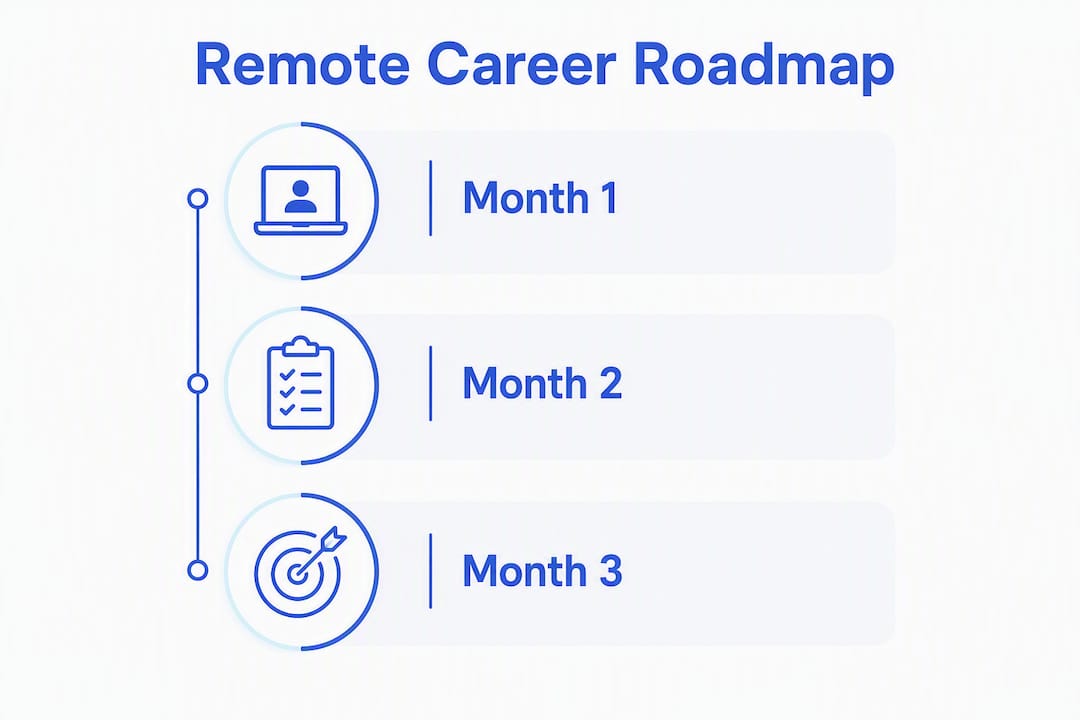
- Your 30/60/90-day roadmap to a remote career
- Key Takeaways
- How the Remoteprofitly team would approach building a remote career today
- Remoteprofitly gives you vetted listings, not just a longer search
- Useful sources and further reading
- FAQ
Which remote careers pay well and match your background?
Remote-friendly roles span a wider range than most people realize. Tech and design roles tend to carry the highest floors, but accessible entry points exist in nearly every category.
Core categories and what they pay:
- Software development / data: Front-end, back-end, and data analyst roles. Entry-level developers typically start with moderate annual salaries; senior engineers earn significantly more.
- SEO and digital marketing: Content strategists, paid media managers, and social media specialists. Mid-level roles generally fall within a competitive salary range.
- UX and graphic design: UX researchers and product designers command strong rates once a portfolio is established; graphic freelancers often start at an hourly rate that reflects market standards.
- Customer success and support: One of the most accessible entry points. Hourly rates for remote support roles commonly run within a moderate range, with senior CS managers earning competitive salaries.
- Sales (SDR/AE): Base salaries plus commission; remote SDR roles generally offer a base salary with additional commission-based earnings.
- Content writing and video: Freelance writers earn per-word rates that increase with experience and niche authority; some hold salaried positions with competitive pay.
- Virtual assistance and operations: Pay varies widely depending on the role from general virtual assistance to executive or project-management support.
- Online teaching / ESL: Platforms pay hourly rates suitable for online teaching and ESL roles; most do not require a teaching license.
- Community engagement and social media management: A growing niche — see Remoteprofitly’s guide on community engagement roles for specifics.
| Role Category | Entry Range | Experienced Range | Contract Type |
|---|---|---|---|
| Software development | — | — | W-2 or 1099 |
| Digital marketing / SEO | — | — | W-2 or freelance |
| UX / graphic design | $25–$40/hr | $60–$100/hr | Freelance or W-2 |
| Customer success | $15–$25/hr | $15–$25/hr | W-2 |
| Virtual assistance | $15–$25/hr | $15–$25/hr | 1099 / freelance |
| Content writing | $15–$25/hr | $15–$25/hr | Freelance |
| Online teaching / ESL | $15–$25/hr | $15–$25/hr | Contract |
Pick one or two categories where your transferable skills overlap with the entry requirements. That focus cuts your job search time significantly.

What do “work-from-anywhere,” “US-only,” and “hybrid” listings actually mean for you?
Remote listings fall into three distinct location-flexibility categories, and confusing them is the most common reason qualified candidates get rejected before an interview.


Work-from-anywhere: The employer hires globally, handles international payroll (often through an Employer of Record), and imposes no timezone mandate beyond reasonable overlap. These roles are genuinely location-independent.
US-only (country-specific): The employer runs US payroll, may require specific state residency for tax or benefits reasons, and often lists excluded states in the job description. Always read the fine print — a listing that says “remote” may still exclude California, New York, or a handful of other states due to local compliance costs.
Hybrid/local: Remote flexibility exists, but the role requires in-office presence on a set schedule. These are not fully remote roles, and commute distance matters.
Before you apply, confirm these five things:
- Does the posting list excluded states? If yours is on the list, move on.
- Does the employer use a US payroll provider, or do they require an EOR for non-US workers?
- What timezone overlap is required? “Flexible” often means “flexible within EST/PST.”
- Are benefits (health insurance, 401(k)) tied to a specific state of residence?
- Does the role require E-Verify authorization? Check e-verify.gov if you are unsure of your eligibility status.
Pro Tip: Ask directly in your cover letter: “This role is listed as remote — can you confirm it is open to applicants in [your state]?” Employers appreciate the clarity, and it saves everyone time.
For a deeper look at state-level payroll rules, Remoteprofitly’s legal considerations guide covers the most common US jurisdiction issues.
Where do you find legitimate remote job listings?
The volume of remote listings has grown, but so has the noise. Vetted platforms and curated communities that screen postings reduce your exposure to scams and low-quality gigs considerably.
Prioritized search channels:
- Remoteprofitly: Curated listings with a focus on social media, content, and online income roles, plus 50+ guides to help you apply smarter.
- Niche role boards: Role-specific boards (e.g., content, design, dev) surface higher-quality listings than broad aggregators for specialized searches.
- Company career pages: Large employers post remote-eligible roles directly, often with clearer eligibility notes than third-party boards.
- LinkedIn: Strong for mid-career transitions and roles requiring professional networks; filter by “Remote” and set job alerts.
- Broad aggregators like Indeed: Hundreds of live remote listings with location filters, but require more manual vetting.
- Gig platforms: Useful for freelance test projects and building early portfolio evidence before targeting salaried roles.
What a trustworthy listing looks like: clear payroll type (W-2 or 1099), specific duties and deliverables, stated timezone expectations, no upfront fees of any kind, and a real company domain in the contact email.
“Curated platforms and communities that screen listings reduce exposure to scams and low-quality postings; clearly documented vetting policies are a key trust signal for applicants evaluating where to spend their time.” — Remote.co
What skills and habits do remote employers actually hire for?
Hard skills get you the interview. Remote-ready habits get you the offer.
Hard skills by category (minimum viable toolkit):
- Front-end roles: HTML, CSS, JavaScript, and at least one framework (React or Vue).
- Marketing: SEO fundamentals, Google Analytics 4, copywriting, and one paid media platform.
- Design: Figma for UX; Adobe Creative Suite or Canva Pro for graphic work.
- Customer success: Salesforce or HubSpot CRM, Zendesk or Intercom, and strong written communication.
Remote-ready habits employers screen for:
- Asynchronous communication: Writing updates, decisions, and blockers in Slack, Notion, or Loom without waiting for a meeting.
- Documentation: Keeping processes written and accessible so teammates in different timezones can self-serve.
- Outcome focus: Framing your work in results, not hours logged.
- Independent problem-solving: Demonstrating you can unblock yourself before escalating.
“High-performing remote contributors master asynchronous communication and documentation; remote-first hiring favors evidence of written processes over meeting performance.” — Remote.com
Pro Tip: Package your portfolio around outcomes, not tasks. “Redesigned onboarding flow, reducing time-to-first-value by 30%” is a remote-ready proof point. “Worked on onboarding” is not.
What are realistic earnings and timelines for remote work?
Three common paths, each with a different ramp:
- Mid-career remote transition: — Professionals moving from on-site to remote in their existing field often see the shortest timeline — 4–8 weeks — because the skills transfer directly and the eligibility hurdles are lower.
| Path | Time to First Income | Weekly Earnings (Early) | Weekly Earnings |
|---|---|---|---|
| Freelance / gig | 2–6 weeks | — | — |
| Entry salaried remote | 2–5 months | — | — |
| Mid-career transition | 4–8 weeks | — | — |
The $1,000/week milestone is achievable on all three paths. The freelance route gets you there fastest in calendar time but requires active client acquisition. The salaried route is slower to start but more predictable once you land the role.
Your remote application checklist and interview questions to ask
Before you hit send:
- Confirm the role is open in your state (check the posting’s eligibility language).
- Verify compensation is clearly stated — hourly, salary, or project rate.
- Confirm the payroll type (W-2 employee or 1099 contractor) and what that means for your taxes.
- Check that required tools are listed and you have working proficiency in them.
- Confirm timezone overlap requirements match your availability.
Questions to ask the employer:
- “How does your team communicate day-to-day — primarily async or synchronous?”
- “How is performance measured in this role, and over what timeframe?”
- “What does onboarding look like for a fully remote hire?”
- “What payroll system do you use, and how do you handle state tax compliance?”
Red flags to walk away from:
- Any request for payment before you start (“training fee,” “equipment deposit”).
- Vague role descriptions with no listed duties or deliverables.
- Requests for your Social Security number or bank details before a signed offer.
- Pressure to accept within 24 hours with no written offer.
Pro Tip: Ask for the offer in writing before you resign from anything. A verbal offer is not an offer.
How do you spot and avoid remote job scams?
Remote job scams have one consistent pattern: they create urgency and ask for something before you receive anything.
Common red flags:
- Upfront payment requests framed as “training,” “certification,” or “equipment.”
- Pay promises that are dramatically above market rate for the stated role.
- Job descriptions that are copy-pasted across multiple unrelated companies.
- Contact emails from Gmail or Yahoo rather than a company domain.
- No verifiable company website, LinkedIn page, or public reviews.
Vetting checklist (run this before every application):
- Search the company name on LinkedIn and confirm it has real employees.
- Check Glassdoor or Indeed reviews for the company name.
- Verify the job posting URL matches the company’s official domain.
- Ask for a contract or written scope of work before any trial task.
- Confirm the payroll method — legitimate employers use established payroll providers.
Pro Tip: If an employer asks you to complete an unpaid “test project” that looks suspiciously like real deliverable work, ask for a paid micro-project instead. Legitimate companies respect that boundary.
Your 30/60/90-day roadmap to a remote career
Month 1 — Foundation:
- Identify your target role category and confirm your location eligibility.
- Update your resume and LinkedIn with outcome-focused language.
- Complete one skill-building course relevant to your target role (Coursera, LinkedIn Learning, or a role-specific platform).
- Apply to 10–15 vetted listings through Remoteprofitly and niche boards.
- Set up a simple portfolio page (even a Google Doc or Notion page works at this stage).
Month 2 — Momentum:
- Aim for 3–5 interviews or screening calls.
- Refine your pitch based on feedback patterns.
- Add one new portfolio piece or case study.
- If pursuing freelance, land your first paid project — even a small one.
- Join a remote work community for peer accountability and job leads.
Month 3 — Conversion:
- Target your first offer or first recurring client.
- Negotiate compensation with market data in hand (Bureau of Labor Statistics occupational data is a reliable reference).
- Build your async communication habits before day one — document your processes from the start.
| Phase | Key Milestone | Primary Resource |
|---|---|---|
| Month 1 | Resume updated, 10–15 applications sent | Remoteprofitly guides, LinkedIn |
| Month 2 | First interviews, one portfolio piece added | Niche job boards, community feedback |
| Month 3 | First offer or first paid client | BLS salary data, Remoteprofitly listings |
Pro Tip: Treat your job search like a project. Set a weekly application target, track your pipeline in a simple spreadsheet, and review what is and is not working every Friday.
Key Takeaways
The most effective path to a remote career combines location eligibility verification, targeted role selection, and consistent applications through vetted listings — all three together, not one at a time.
| Point | Details |
|---|---|
| Eligibility first | Always confirm state and payroll eligibility before applying — exclusions are common. |
| Pick one or two roles | Focused applications to matched categories outperform scattershot applying every time. |
| Vetting reduces risk | Curated platforms with documented screening policies cut scam exposure significantly. |
| Outcomes beat hours | Package every application around measurable results, not job duties or time logged. |
| Remoteprofitly accelerates the search | With 50+ curated resources and 100+ placements, Remoteprofitly is a practical starting point for vetted listings and role-specific guides. |
How the Remoteprofitly team would approach building a remote career today
If we were starting a remote career search from scratch today, the first hour would not be spent on job boards. It would be spent on clarity: which role category matches existing skills, and which US states or location types are actually eligible for that work. That single filter eliminates a large portion of wasted applications before they happen.
From there, the focus would shift to evidence. Remote hiring managers cannot observe you in an office, so your written profile, portfolio, and async communication samples do the work your in-person presence used to do. Every piece of evidence should answer one question: “What did this person actually produce, and can I measure it?”
The 30/60/90 roadmap above reflects how we have seen the most successful transitions unfold — not through volume alone, but through targeted, well-documented applications to roles where the fit is genuine. Real success stories from people who made this transition reinforce that the timeline is realistic when the approach is disciplined.
One thing most guides understate: the mental shift from office-based to remote work is as significant as the skill shift. Building async habits, documenting your own processes, and measuring your output by outcomes rather than presence — these are learnable, but they take deliberate practice. Start before you land the role, not after.
Remoteprofitly gives you vetted listings, not just a longer search
Most job seekers spend weeks sifting through listings that turn out to be ineligible, scammy, or simply a poor fit. Remoteprofitly cuts that friction by curating remote social media and content roles, providing scam-avoidance guidance, and backing every resource with a community that has supported 100+ placements in the past year.


The platform’s 50+ guides cover everything from resume rewrites to mock interviews, so you arrive at each application better prepared than the average candidate. Whether you are targeting your first remote social media role or exploring beginner-friendly income streams to build momentum while you search, Remoteprofitly has a clear next step for you. Browse the curated listings now and apply to your first vetted opportunity today.
This article provides general career information, not legal or financial advice. Confirm current payroll rules, state eligibility requirements, and compensation norms with a qualified professional or the relevant primary source.
Useful sources and further reading
“Remote work opportunities are commonly grouped into ‘work from anywhere,’ ‘country-specific/US-only,’ and ‘hybrid/local’ categories; confirming your eligibility for the listing’s category is the essential first step before applying.” — Remote.com Careers
- Indeed Remote Jobs — broad aggregator with location filters; useful for volume searches and checking state exclusions in live postings.
- Amazon Remote Jobs — example of a large employer’s remote career page with eligibility notes.
- Remoteprofitly — curated listings, 50+ guides, scam-avoidance resources, and community support for remote job seekers.
- E-Verify (e-verify.gov) — US work authorization verification tool; relevant for confirming employment eligibility.
- UC San Diego Remote Opportunities — institutional example of how large US employers define and post remote-eligible roles.
FAQ
What is the best remote job right now?
Customer success, digital marketing, and software development consistently rank among the most in-demand remote roles in the US. Virtual assistance, content writing, and online ESL teaching, with typical entry rates around $15–$25/hour, remain the most accessible entry points for career changers with no prior remote experience.
What career is best suited for remote work?
Roles built around written communication and digital deliverables — software development, content creation, SEO, UX design, and customer success — transfer most naturally to remote environments because output is measurable without physical presence.
How do you realistically make $1,000 a week working remotely?
At $25/hour, 40 billable hours per week reaches that level — achievable through two or three steady freelance clients by month three or four. A salaried remote role at $60,000/year crosses $1,000/week gross. Remoteprofitly’s beginner income guide outlines several paths to get there.
Does Amazon hire people to work from home?
Yes. Amazon posts remote-eligible roles across corporate and hourly functions on its dedicated remote jobs page, though many listings include state or location eligibility restrictions that vary by role.
Recommended
- Remote Social Media Jobs and Work-From-Home Opportunities in 2026 – Social Media Job Search Community
- Work From Anywhere Jobs: Your 2026 Sustainability Guide – Social Media Job Search Community
- Remote Social Media Jobs and Work-From-Home Opportunities – Social Media Job Search Community
- Remote Social Media Strategist Roles: The 2025 Guide – Social Media Job Search Community