

Legitimate online income is defined as earnings generated through genuine skill, effort, or value delivered to a real buyer or employer on a credible platform. The real way to make money online is not a shortcut. It requires choosing methods that pay fairly, operate transparently, and reward consistent work. A legitimate opportunity delivers real value, avoids deception, and never asks you to pay upfront to access work. This article covers the methods that actually produce results, from fast-start options like freelancing and user testing to longer-term paths like affiliate marketing and digital products, along with the tax and safety basics every online earner needs in 2026.
What are the real ways to make money online fast?

Some genuine ways to earn online produce results within days. Others take months. Knowing which is which saves you from wasted effort and false expectations.
The fastest legitimate methods share two traits: low setup requirements and immediate demand. Here are the most reliable options for getting started quickly:
- Freelancing. Writing, graphic design, video editing, data entry, and social media management are all in demand. Platforms that connect freelancers with clients let you post a profile and receive work requests within 24–48 hours. Skill-based freelancing can earn $500 to $8,000+ monthly depending on your specialty and client load. That range reflects the difference between a beginner taking small tasks and an experienced freelancer managing multiple clients.
- Selling unused items. Reselling electronics, clothing, furniture, or collectibles through online marketplaces requires no special skills. You list, ship, and collect payment. This is one of the fastest earning methods for people who need cash within a week.
- Website and app user testing. Companies pay real people to test their digital products and report usability issues. Sessions typically last 15–20 minutes and pay a fixed fee per test. This is a low-barrier entry point, though earnings stay modest.
- Microtasks and surveys. These are legitimate but rarely exceed pocket change. They work as supplemental income, not a primary source. Prioritize skill-based work if you want meaningful revenue.
Pro Tip: When choosing a freelancing category, pick the skill you already use at work or in daily life. Starting with a familiar skill cuts your ramp-up time and produces better early reviews, which directly affects how quickly you attract paying clients.
How to build sustainable income through freelancing and remote work
Skill-based freelancing is the most reliable path to consistent, meaningful online income. The methods below scale with your experience and reputation.
- Virtual assistance. Virtual assistants handle email management, scheduling, research, customer support, and social media posting for business owners. Rates typically start around $15–$25 per hour for beginners and climb with specialization. You can find high-paying remote roles in this category once you build a track record.
- Online tutoring and teaching. If you have subject expertise, you can teach students or professionals through tutoring platforms or video courses. Academic subjects, language instruction, and professional skills like Excel or coding all have active demand. Tutors with verified credentials and strong reviews command premium rates.
- Content creation as a service. Businesses need blog posts, social media copy, email newsletters, and video scripts. Content creation roles pay well when you specialize in a niche rather than offering generic writing. A writer who focuses on SaaS product pages, for example, earns significantly more than a generalist.
- Remote social media management. Brands hire remote workers to manage their Instagram, LinkedIn, TikTok, and Facebook accounts. This role combines scheduling, community engagement, and light analytics. Remoteprofitly connects readers with remote social media jobs that match this profile.
- Remote employment. Full-time remote jobs in customer service, project management, marketing, and tech offer stable income with employer benefits. These positions require a formal application process but provide the most predictable monthly earnings.
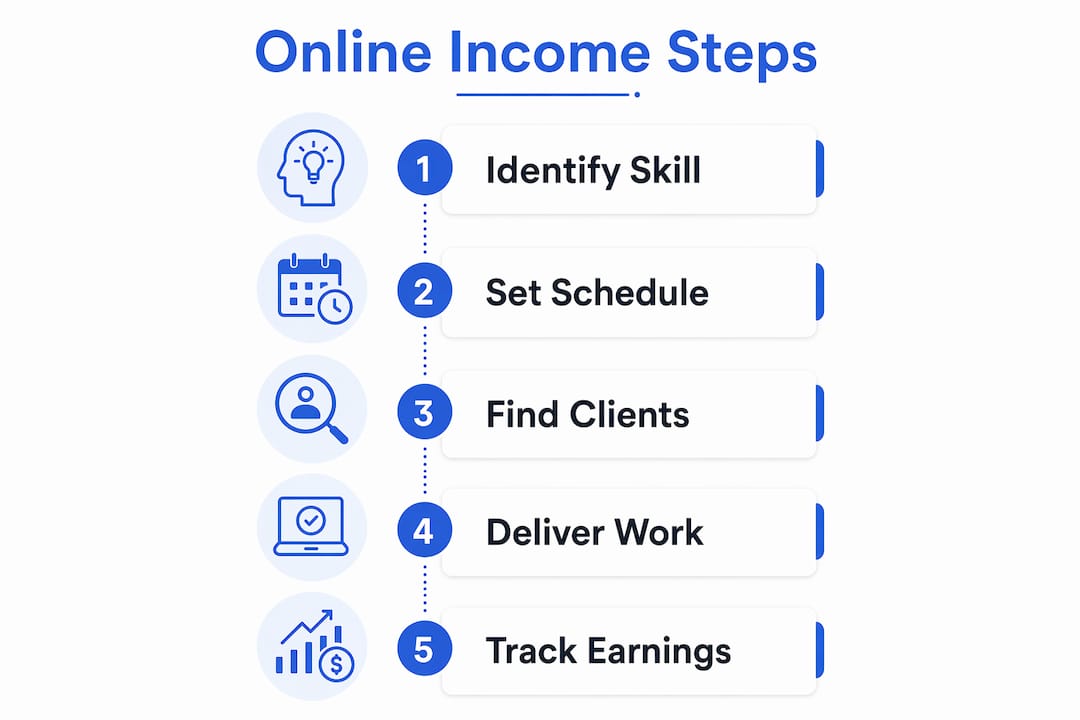
Consistency is the variable that separates earners from quitters. Treating online work like a business, with set hours, professional communication, and tracked deliverables, produces better client retention and faster income growth.
Pro Tip: Track every payment you receive in a simple spreadsheet from day one. Knowing your monthly income by client and service type helps you identify which work pays best and where to focus your time as you grow.
What are the best scalable online business models for long-term income?
Some online income paths take months to produce their first dollar. They reward patience and consistent effort with income that compounds over time. The table below compares the most common scalable models.
| Model | Time to first income | Typical monthly range | Key success factor |
|---|---|---|---|
| Affiliate marketing | 3–6 months | Variable, grows with traffic | Authentic content solving real problems |
| Digital products (ebooks, templates) | 1–3 months | Scales with audience size | Quality and niche specificity |
| Blogging with SEO | 6–12 months | Grows with search traffic | Consistent publishing and keyword strategy |
| YouTube monetization | 6–18 months | Depends on views and niche | Audience retention and upload frequency |
Affiliate marketing is one of the most misunderstood models. Lazy affiliate marketing without genuine product use or quality content fails consistently. Success comes from using the products you recommend, writing content that solves specific reader problems, and building trust before asking for a click. Affiliate income is not passive in the early stages. It requires active content creation and audience development.
Selling digital products, such as ebooks, Canva templates, printable planners, or online courses, offers strong margins because there is no inventory or shipping cost. The challenge is building an audience willing to buy. Most successful digital product sellers spend their first three to six months building an email list or social following before launching anything.
Blogging and SEO require the longest runway. Blogging and affiliate marketing typically need 6–18 months of consistent effort before producing reliable income. That timeline discourages most beginners, which is exactly why the people who persist tend to dominate their niches.
Combining models accelerates results. A blogger who also sells a digital product and includes affiliate links earns from three sources simultaneously. Building one audience and monetizing it multiple ways is the most efficient long-term strategy.
What legal and financial essentials must online earners know in 2026?
Online income is taxable income. This is not optional or negotiable. All online earnings are treated as self-employment or trading income in virtually every country, and you are responsible for reporting them accurately.
The core financial habits every online earner needs:
- Track income and expenses from the start. A simple spreadsheet or bookkeeping tool captures every payment received and every business cost. This record is your tax return foundation.
- Set aside a percentage of each payment for taxes. A common starting point is 25–30% of net income, though your actual rate depends on your country and total earnings. Setting this aside in a separate account prevents a painful surprise at tax time.
- Use contracts for freelance work. A written agreement specifying deliverables, payment terms, and revision limits protects both parties. For larger projects, platform escrow holds payment until work is approved.
- Use secure payment methods. Accept payment through established platforms that offer buyer and seller protection. Avoid wire transfers or gift card payments from clients you have not verified.
“Legitimate online income opportunities ask for your time and effort upfront, not your money. Any opportunity that requires you to pay a fee before you can start working is a scam, not a job.”
Scam red flags are consistent and recognizable. Never pay upfront fees to access job listings or begin work. Legitimate employers pay you. Vague job descriptions, promises of massive earnings for minimal effort, and pressure to recruit others are all warning signs. Verify any company independently through its official website and public reviews before sharing personal information.
Pro Tip: Open a separate bank account for online income. Keeping business money separate from personal funds makes tax reporting cleaner and helps you see exactly how much your online work earns each month.
Key Takeaways
Legitimate online income requires genuine skill or effort applied consistently to credible platforms, with realistic timelines ranging from days for freelancing to months for content-based businesses.
| Point | Details |
|---|---|
| Fast methods exist but have limits | Freelancing and reselling generate income quickly; microtasks and surveys pay very little. |
| Skill-based work pays most | Virtual assistance, tutoring, and content creation produce the highest and most consistent returns. |
| Scalable models need patience | Affiliate marketing and blogging take 6–18 months before producing reliable income. |
| Tax compliance is mandatory | All online income must be reported; track earnings and expenses from your first payment. |
| Scams follow predictable patterns | Any opportunity requiring upfront payment to work is not legitimate. |
What working with online income actually taught us
The most common mistake beginners make is treating online income like a lottery ticket. They try one method for two weeks, see no results, and switch to something else. That cycle repeats until they give up and conclude that earning online is a myth. The reality is that most sustainable paths need a 60–180 day ramp-up with persistent effort before meaningful returns appear.
The second mistake is chasing the method that sounds most exciting rather than the one that fits existing skills. A teacher who starts tutoring online will outperform a teacher who tries to build a dropshipping store from scratch. Familiarity with the work reduces the learning curve and produces better early results, which builds the confidence to keep going.
Patience and consistency outperform every shortcut. The online earners who build real income treat their work like a business from day one. They set hours, communicate professionally, deliver on time, and reinvest early earnings into tools or skills that raise their rates. They also choose one focused method and develop it before adding a second income stream.
Start small, execute well, and build from there. A single freelance client who pays reliably is worth more than ten income ideas that never launch.
— Remoteprofitly Team
Remoteprofitly’s curated resources for online earners
Remoteprofitly exists to connect you with legitimate, vetted opportunities that match the methods covered in this article.
The best online income streams for beginners are curated and updated regularly on the platform, covering everything from content creation to remote social media roles. If you are ready to move from research to action, the Remoteprofitly job search platform lists remote positions across social media management, virtual assistance, and content creation. The platform’s 50+ guides and community resources give you the support structure that most solo job seekers lack. Over 100 successful placements in the past year show that the opportunities are real and the process works.
FAQ
What is the fastest real way to make money online?
Freelancing and selling unused items are the fastest legitimate methods, with earnings possible within days to two weeks of starting. User testing platforms also pay quickly but offer limited volume.
How much can you realistically earn from online work?
Earnings vary widely by method. Low-effort tasks like surveys yield very little, while skill-based freelancing and remote services can produce $500 to $8,000+ per month depending on experience and client load.
Do I have to pay taxes on online income?
Yes. Online income is taxable as self-employment or trading income in virtually every country. You are responsible for tracking earnings, reporting them accurately, and setting aside money for tax payments.
How do I know if an online job is a scam?
The clearest red flag is any request for upfront payment to access work or job listings. Legitimate employers pay you for your work. Vague promises of high earnings for minimal effort and pressure to recruit others are also reliable warning signs.
How long does it take to build a sustainable online income?
Fast-start methods like freelancing can produce income within days. Content-based models like blogging and affiliate marketing typically require 6–18 months of consistent effort before generating reliable monthly earnings.
Recommended
- Fast Ways to Make Money with Online Jobs – Social Media Job Search Community
- How to Find Legit Remote Jobs Online in 2026 – Social Media Job Search Community
- Top Online Jobs That Generate Income Quickly – Social Media Job Search Community
- How to Find Jobs That Make Money Online – Social Media Job Search Community