

White Label Social Media Management: A Comprehensive Guide
Table of Contents
- Introduction
- What Is White Label Social Media Management?
- How to Launch Your White Label Social Media Service
- How to Market Your White Label Social Media Service
- Final Thoughts
Introduction
At RemoteProfitly, we’ve seen a surge in agencies looking to expand their service offerings without the hassle of building everything from scratch.
Enter white label social media management – a game-changing solution for businesses aiming to grow their portfolio quickly and efficiently.
This approach allows you to offer top-notch social media services under your own brand, opening up new revenue streams and enhancing client relationships.
In this post, we’ll guide you through the ins and outs of white label social media management, helping you make the most of this lucrative opportunity.
What Is White Label Social Media Management?
The Concept of Rebranding
White label link building is an offshore service where the SEO provider builds backlinks on behalf of another agency. This concept can be applied to various digital marketing services, including social media management, allowing agencies or freelancers to offer these services under their own brand name.
At its core, white labelling involves rebranding existing services. For social media management, this means presenting a comprehensive suite of tools as your own. These tools can include content creation, scheduling, analytics, and reporting. Your clients interact with these services as if your agency developed them in-house.
Driving Agency Growth
White label solutions offer significant benefits for agencies and freelancers. This growth stems from the ability to quickly scale services without the overhead of developing proprietary tools.
Comprehensive Service Offerings
White label social media management typically includes a wide range of services. The following chart illustrates the key components of a comprehensive white label social media management service:
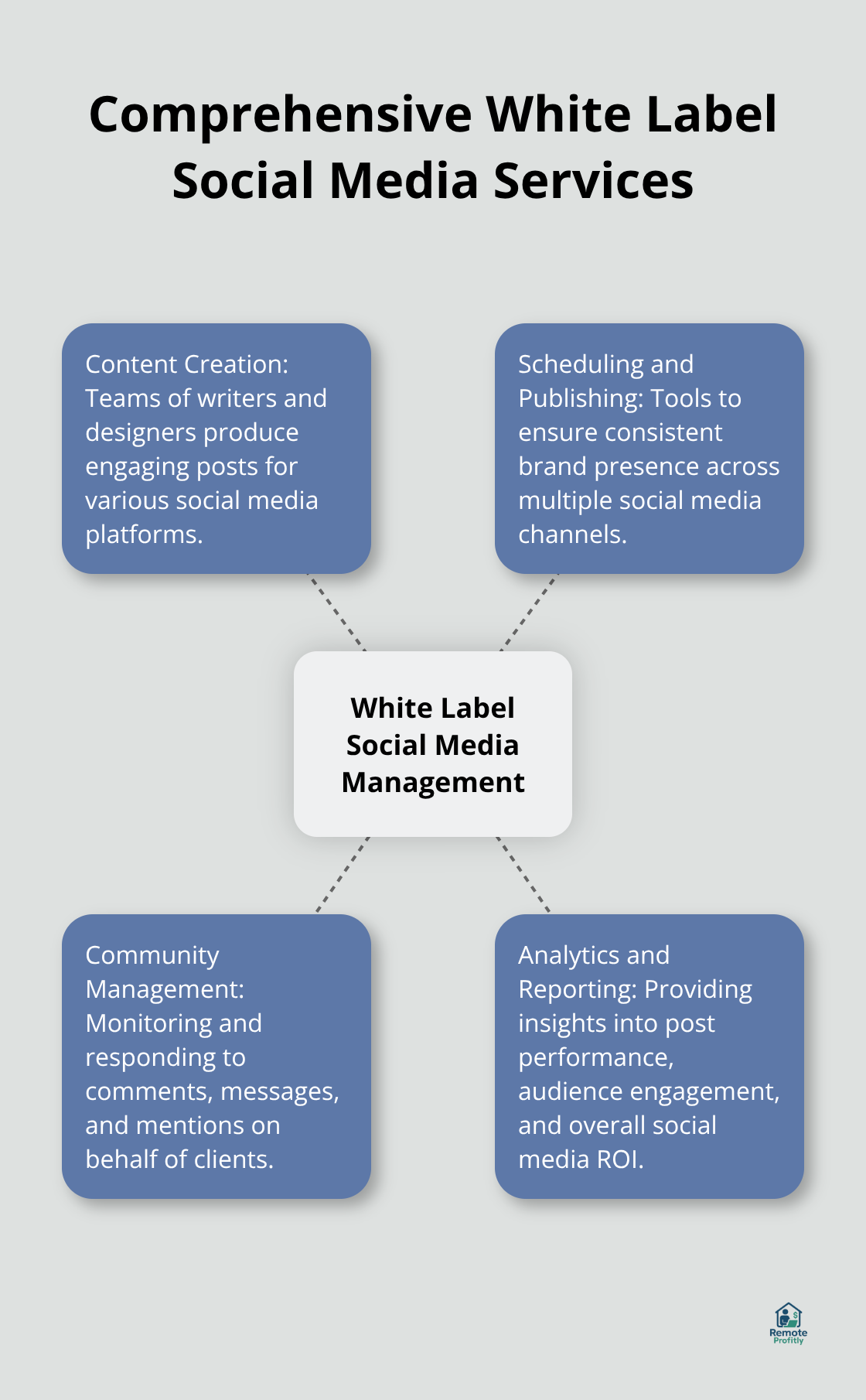
- Content Creation: Many providers offer a team of writers and designers to produce engaging posts.
- Scheduling and Publishing: This feature allows for consistent brand presence across multiple social media channels.
- Community Management: This involves monitoring and responding to comments, messages, and mentions on behalf of clients.
- Analytics and Reporting: These tools provide insights into post performance, audience engagement, and overall social media ROI.
The Impact on Client Relationships
Agencies offering a full suite of white label social media services can often command higher retainers and enjoy longer client relationships. The comprehensive nature of these services positions agencies as true partners in their clients’ social media success, rather than just tactical executors.
As we move forward, let’s explore how to set up your white label social media management service effectively. This next section will cover choosing the right provider, customising your offering, and developing pricing strategies that maximise your profit margins.
How to Launch Your White Label Social Media Service
Selecting Your White Label Partner
The selection of a white label provider forms the foundation of your service. Look for a provider with a proven track record, robust features, and excellent customer support. A recent compilation lists the 10 best white label social media management agencies that can help boost brand recognition and engagement.
When you evaluate providers, consider their pricing structure, scalability, and the range of services they offer. SocialPilot, a popular white label solution, offers plans starting at $100 per month (which includes features like content curation, analytics, and client management).
Test the platform yourself. Many providers offer free trials or demos. Use this opportunity to assess the user interface, ease of use, and quality of analytics reports.
Branding Your Service
After you choose a provider, brand the service as your own. This step extends beyond simply adding your logo. Customise the dashboard, reports, and client communication to reflect your agency’s unique style and voice.
If your agency specialises in data-driven marketing, ensure your social media reports emphasise key performance indicators and ROI metrics. This alignment between your brand promise and service delivery will boost client satisfaction and retention.
Pricing Your White Label Service
The pricing of your white label social media management service requires a delicate balance. You need to cover your costs, make a profit, and still offer competitive rates to your clients.
Calculate your costs first, including the white label provider’s fees and any additional resources you’ll need (such as staff time for account management). Then, research your competitors’ pricing to gauge market rates.
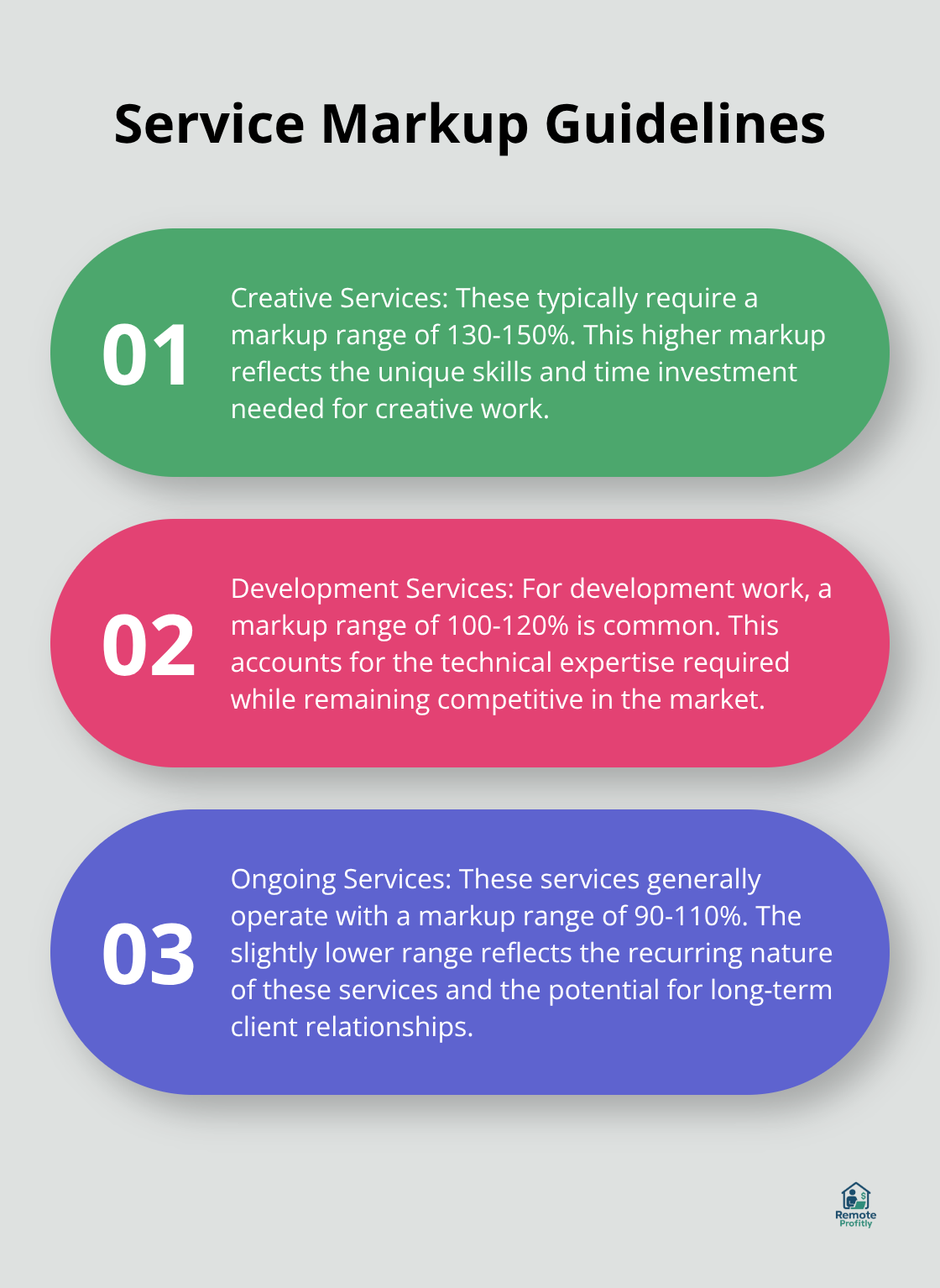
Recent data suggests different markup ranges for various types of services. The following chart illustrates these markup guidelines:
Try to offer tiered pricing based on service levels or client size. This approach allows you to cater to a wider range of clients and upsell as their needs grow. You could offer a basic package for small businesses and a premium package for larger corporations with more complex needs.
Your pricing should reflect the value you add. If you provide strategic guidance, custom reporting, or additional services on top of the white label offering, factor this into your pricing structure.
Preparing for Launch
With your provider selected, service branded, and pricing strategy in place, you’re almost ready to launch. The next step involves marketing your new white label social media management service effectively. You’ll need to identify your target clients, craft a compelling unique selling proposition, and develop effective promotion and sales techniques to attract and convert potential customers.
How to Market Your White Label Social Media Service
Identify Your Ideal Clients
Start by defining your target market. You should aim for small businesses, mid-sized companies, or large corporations. Each segment has different needs and budgets. Small businesses often prioritise cost-effective solutions, while larger companies may value comprehensive analytics and reporting.
Consider industry focus as well. Some agencies find success by specialising in specific sectors (e.g., e-commerce, healthcare, or hospitality). This specialisation allows you to tailor your offerings and become an expert in that niche.
Use data to inform your decisions. Analyse your current client base to identify patterns. Which clients are most profitable? Which industries do you have the most success with? Tools like Google Analytics can provide insights into website visitors and their interests.
Craft a Compelling Value Proposition
Your unique selling proposition (USP) should clearly communicate why clients should choose your white label social media service over competitors. Focus on the specific benefits you offer, such as:
- Expertise in particular industries or platforms
- Proprietary strategies or tools
- Exceptional customer service
- Proven results (with specific metrics)
You might position yourself as “The go-to social media partner for e-commerce brands, delivering an average 300% increase in engagement within 3 months.”
Test different value propositions with your target audience. Use A/B testing on your website or in email campaigns to see which messages resonate most effectively.
Implement Effective Promotion Strategies
With your target clients and USP defined, it’s time to promote your service. Here are some proven strategies:
- Content Marketing: Create valuable content that showcases your expertise. This could include blog posts, whitepapers, or case studies demonstrating your success with white label social media management.
- Networking: Attend industry events and join professional organisations. Personal connections can lead to valuable partnerships and client referrals.
- Paid Advertising: Use platforms like Google Ads or LinkedIn Ads to reach your target audience. Start with a small budget and optimise based on performance data.
- Partnerships: Collaborate with complementary businesses. For example, if you focus on social media, partner with a web design agency to cross-promote services.
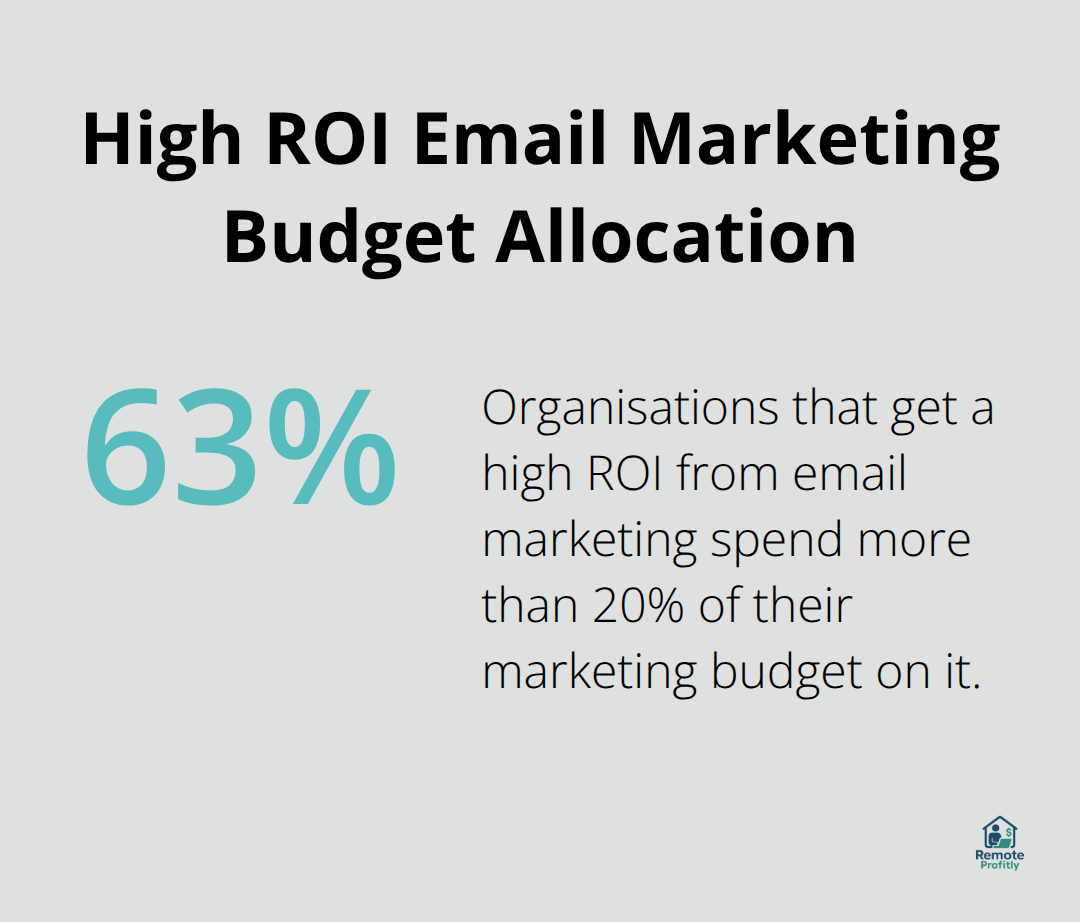
- Email Marketing: Build an email list and nurture leads with regular, valuable content. The following chart illustrates the importance of email marketing budget allocation for high ROI:
- Referral Program: Implement a referral program that incentivises current clients to recommend your services. This can be a cost-effective way to acquire new business.
You should track the performance of your marketing efforts. Use tools like Google Analytics and CRM software to measure lead generation, conversion rates, and client acquisition costs. This data will help you refine your strategies over time.
Final Thoughts
White label social media management empowers agencies to expand their services and increase revenue without substantial upfront investments. This approach allows businesses to leverage established providers’ expertise and resources, resulting in rapid scaling of operations. The digital landscape will continue to evolve, bringing more sophisticated white label solutions that include AI-driven content creation and predictive analytics for campaign optimisation.
Successful implementation of white label social media management requires careful provider selection, customised offerings aligned with your brand, and competitive pricing strategies. Understanding target clients’ needs and crafting a compelling value proposition will set you apart from competitors. The most successful agencies add value through strategic guidance, industry expertise, and exceptional client service, creating a truly differentiated offering that drives results.
We invite you to explore white label social media management opportunities with RemoteProfitly. Our platform connects you with top-tier remote social media talent, enabling efficient team scaling and ensuring you have the skills needed to deliver outstanding results for your clients. White label social media management presents an exciting opportunity for agencies to grow their business and position themselves for long-term success in the dynamic world of digital marketing.